Body proportions
Videos
Body proportions is the study of artistic anatomy, which attempts to explore the relation of the elements of the human body to each other and to the whole. These ratios are used in depictions of the h
Madonna with the Long Neck, c. 1534–1540, by Parmigianino. As in other Mannerist works, the proportions of the body – here the neck – are exaggerated for artistic effect.


Drawing of a human male, showing the order of measurement in preparation for a figurative art work (Lantéri, 1903)

Venus of Brassempouy, about 25,000 years ago
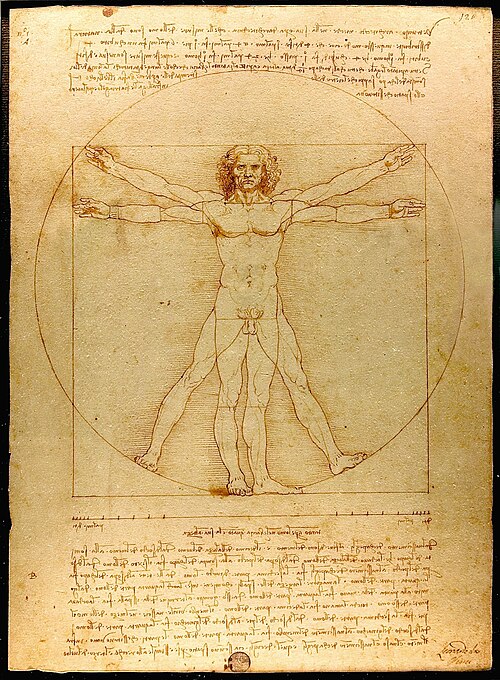
The Vitruvian Man drawing
Waist–hip ratio
Videos
The waist–hip ratio or waist-to-hip ratio is the dimensionless ratio of the circumference of the waist to that of the hips. This is calculated as waist measurement divided by hip measurement. For exam
Body proportions
…ratios for a (US) normally healthy man or woman is 0.46–0.53 and 0.45–0.49 respectively; the ratio ranges beyond 0.63 for morbidly obese individuals. Waist-to-hip ratio: artist's conception of the ideal waist–hip ratio has varied down the ages, but for female figures "over the 2,500-year period the average WHR never…

The Venus de Milo has a WHR value of 0.76.

Venus of Willendorf. The earliest known representations of female figures date from 23,000 to 25,000 years ago and had bodies with vestigial head and limbs, noted for their very high waist–hip ratio of 1:1 or more. It may be that the artists' "depictions of corpulent, middle-aged females were not 'Venuses' in any conventional sense. They may, instead, have symbolized the hope for survival and longevity, within well-nourished and reproductively successful communities."

Women with a relatively low waist-hip ratio (the hourglass figure) is commonly considered attractive.