Bogd Khanate of Mongolia
Videos
The Bogd Khanate of Mongolia was the Mongolian state in Outer Mongolia between 1911 and 1919 and again from 1921 to 1924. By the spring of 1911, some prominent Borjigin-Mongol nobles including Prince

Outer Mongolian tribes in 1910s

The Bogd Khaan

Ladies at court Bogd Khanate.

Prime Minister Tögs-Ochiryn Namnansüren
Qing dynasty
Videos
The Qing dynasty, officially the Great Qing, also known as the Qing Empire or Qing China, was a Manchu-led imperial dynasty of China and an early modern empire in East Asia which existed from 1636/164
Bogd Khanate of Mongolia
…Namnansüren Sain Noyon Khan persuaded the Jebstundamba Khutukhtu to convene a meeting of nobles and ecclesiastical officials to discuss independence from Manchu-led Qing Dynasty. On 30 November 1911 the Mongols established the Temporary Government of Khalkha. On 29 December 1911 the Mongols declared their independence from the…

Manchu cavalry charging Ming infantry at the 1619 Battle of Sarhū

Coins of Hong Taiji in Manchu script
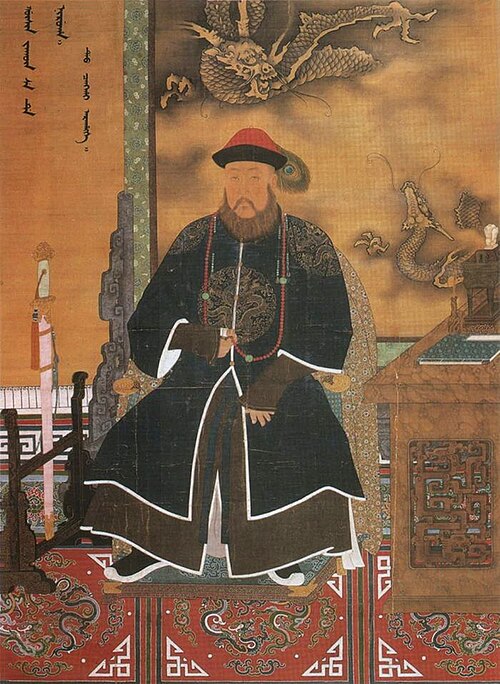
Dorgon (1612–1650)

Qing expansion and conquest of the Ming