Bond Street
Videos
Bond Street in the West End of London links Piccadilly in the south to Oxford Street in the north. Since the 18th century the street has housed many prestigious and upmarket fashion retailers. The sou
Old Bond Street looking south


New Bond Street

In High-Change in Bond Street (1796), James Gillray caricatured the lack of courtesy on Bond Street (young men taking up the whole footpath), which was a grand fashionable milieu at the time.

Bond Street has always been divided into two sections: Old Bond Street to the south and New Bond Street to the north. The London branch of the jeweller Tiffany & Co. is next to the divide, on the Old Bond Street side.
Oxford Street
Videos
Oxford Street is a major road in the City of Westminster in the West End of London, running between Marble Arch and Tottenham Court Road via Oxford Circus. It marks the notional boundary between the a
Bond Street
…Bond Street in the West End of London links Piccadilly in the south to Oxford Street in the north. Since the 18th century the street has housed many prestigious and upmarket fashion retailers. The southern section is Old Bond Street and…
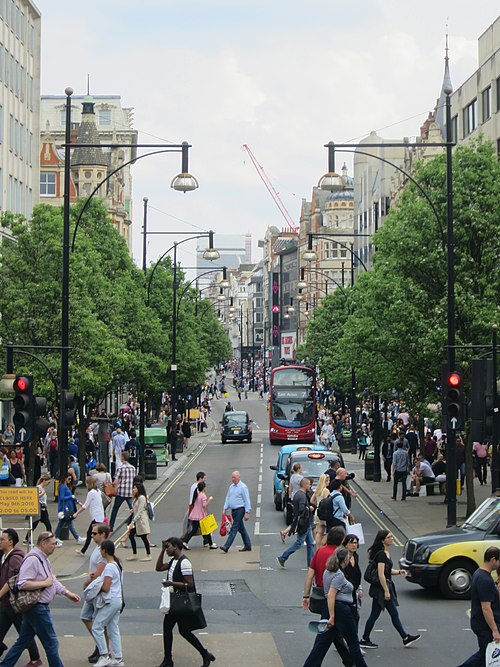
View east along Oxford Street in May 2016

Oxford Street in 1875 (looking towards the present-day site of Selfridges on the right)

Marshall & Snelgrove's department store building of 1870

Former Waring & Gillow store of 1906 ('United Kingdom House')