Bridge (instrument)
Videos
A bridge is a device that supports the strings on a stringed musical instrument and transmits the vibration of those strings to another structural component of the instrument—typically a soundboard, s
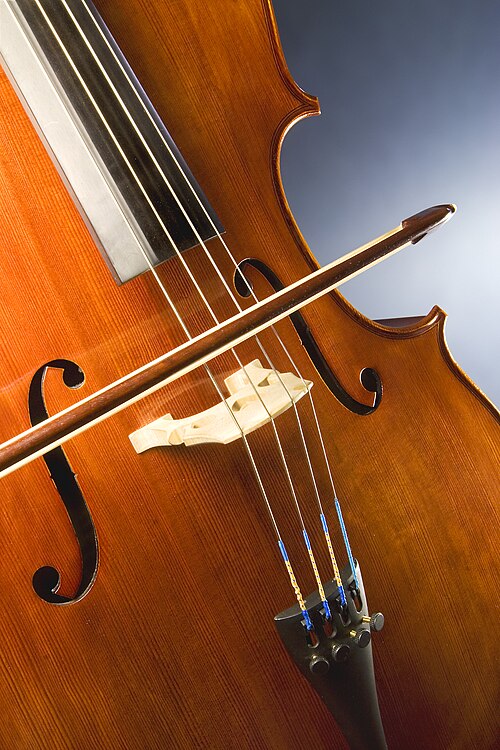
On a cello, the strings are attached to the tailpiece and are held above the soundboard by the bridge.

A violin bridge blank and a finished bridge.

A guitar's bridge holds its strings fast to the instrument; its saddle (white) raises them above the bridge and conveys their vibrations to the bridge. The black fasteners are called string pegs. The black fasteners are "loose"—held in place only by string tension.

A licensed Kahler vibrato system on an '87 Gibson Les Paul Standard. Note that the "whammy bar" lever is not attached in this photo.
Soundboard (music)
Videos
A soundboard is the surface of a string instrument that the strings vibrate against, usually via some sort of bridge. Depending on the instrument, it is also called a top, top plate, resonator, table,
Bridge (instrument)
…the strings on a stringed musical instrument and transmits the vibration of those strings to another structural component of the instrument—typically a soundboard, such as the top of a guitar or violin—which transfers the sound to the surrounding air. Depending on the instrument, the bridge may be made of carved…

Soundboard of a harpsichord with Chladni patterns

A portion of the soundboard of a Vose & Sons upright piano