Bronze Age
Videos
The Bronze Age is an archaeological and anthropological term defining a phase in the development of material culture among ancient societies in Asia, the Near East and Europe. An ancient civilisation
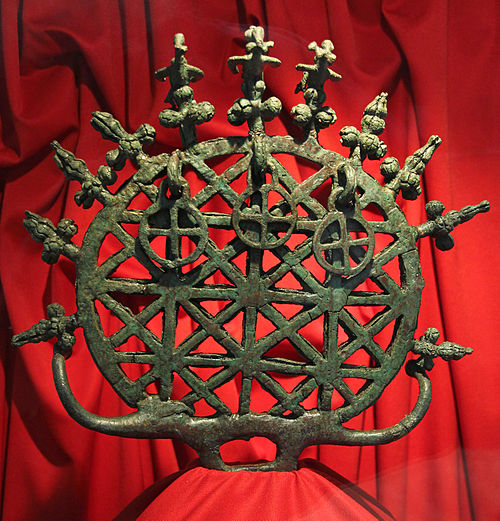
One of the Alaca Höyük bronze standards from a pre-Hittite tomb dating to the 3rd millennium BC, from the Museum of Anatolian Civilizations in Ankara

Hittite bronze tablet from Çorum-Boğazköy dating from 1235 BC, Museum of Anatolian Civilizations, Ankara

Sphinx-lion of Thutmose III (1479–1425 BC)

Late 3rd-millennium BC silver cup from Marvdasht, Fars, with linear-Elamite inscription
Iron Age
Videos
The Iron Age is the final epoch of the three historical Metal Ages, after the Copper Age and Bronze Age. It has also been considered as the final age of the three-age division starting with prehistory
Bronze Age
…bronze from producing areas elsewhere. The Bronze Age is the middle principal period of the three-age system, following the Stone Age and preceding the Iron Age. Conceived as a global era, the Bronze Age follows the Neolithic ("New Stone") period, with a transition period between the two known as the Chalcolithic…

Weapons and fibulae from a Celtic burial site, c. 350 BC.

Willamette Meteorite, the thirteenth largest in the world, is an iron–nickel meteorite found in the USA.

Copy of The Warrior of Hirschlanden (German: Krieger von Hirschlanden), a statue of a nude ithyphallic warrior made of sandstone, the oldest known Iron Age life-size anthropomorphic statue north of the Alps.

Maiden Castle, Dorset, England. More than 2,000 Iron Age hillforts are known in Britain.