Buddhism in Japan
Videos
Buddhism was first established in Japan in the 6th century CE. Most of the Japanese Buddhists belong to new schools of Buddhism which were established in the Kamakura period. During the Edo period, Bu

The Great Buddha (Amida) (Daibutsu) at Kōtoku-in, Kamakura, in Kanagawa Prefecture, Japan (National Treasure)

Kamakura-period statue of Thousand-armed Kannon at Sanjūsangen-dō in Kyoto, Japan.

Painting on silk of the semi-legendary Prince Shōtoku, first major sponsor of Buddhism in Japan

The Great Buddha of Asuka-dera, the oldest Buddha statue in Japan, and an example of the Tori style
Mahayana
Videos
Mahayana is the largest branch of Buddhism, followed by Theravada. It is a broad group of Buddhist traditions, texts, philosophies, and practices that developed in various regions and Buddhist communi

The Five Buddhas in Shishoin Temple (Tokyo). Mahāyāna holds there are multiple buddhas which one can interact with. These buddhas are also able to send manifestations to our world to teach and guide beings.

Mahāyāna Buddhist triad, including Bodhisattva Maitreya, the Buddha, and Bodhisattva Avalokiteśvara. 2nd–3rd century CE, Gandhāra
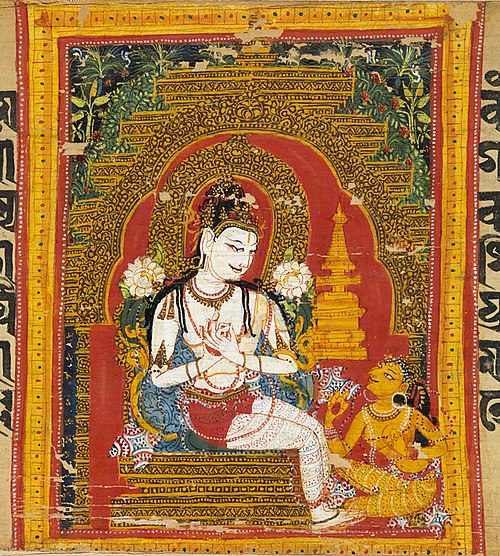
An illustration in a manuscript of the Aṣṭasāhasrikā Prajñāpāramitā Sūtra from Nalanda, depicting the bodhisattva Maitreya, an important figure in Mahāyāna

Seated Avalokiteshvara bodhisattva. Gandharan, from Loriyan Tangai. Kushan period, 1st – 3rd century CE. Indian Museum, Calcutta