The Byzantine–Sasanian War of 602–628, also called the Last Great War of Antiquity, was fought between the Byzantine Empire and the Sasanian Empire. It was the final and most devastating conflict of t
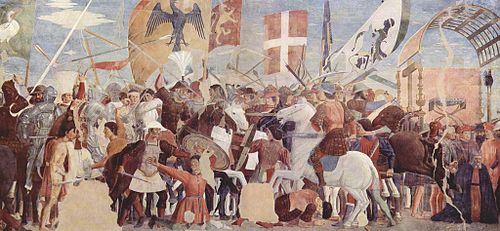
Anachronistic painting of the Battle of Nineveh (627) between Heraclius's army and the Persians under Khosrow II. Fresco by Piero della Francesca, c. 1452

A gold coin of Emperor Phocas

A gold coin of Khosrow II

Solidus of Heraclius (aged 35–38), helmeted and cuirassed facing bust, holding cross, struck 610–613 by the Constantinople mint
Sasanian Empire
Videos
The Sasanian Empire, officially Eranshahr, was an Iranian empire that was founded and ruled by the House of Sasan from 224 to 651 AD. Lasting for over four centuries, the length of the Sasanian dynast
Byzantine–Sasanian War of 602–628
…The Byzantine–Sasanian War of 602–628, also called the Last Great War of Antiquity, was fought between the Byzantine Empire and the Sasanian Empire. It was the final and most devastating conflict of the Roman–Persian wars (54 BC – AD 628). The previous war between the two powers had ended in 591…

Initial coinage of founder Ardashir I, as King of Persis Artaxerxes (Ardaxsir) V. c. 205/6–223/4 AD. Obverse: Bearded facing head, wearing diadem and Parthian-style tiara, legend "The divine Ardaxir, king" in Pahlavi. Reverse: Bearded head of Papak, wearing diadem and Parthian-style tiara, legend "son of the divinity Papak, king" in Pahlavi.

1840 illustration of a Sasanian relief at Firuzabad, showing Ardashir I's victory over Artabanus IV and his forces.

Rock relief of Ardashir I receiving the ring of kingship by the Zoroastrian supreme god Ahura Mazda

Rock-face relief at Naqsh-e Rostam of Persian emperor Shapur I (on horseback) capturing Roman emperor Valerian (standing) and Philip the Arab (kneeling), suing for peace, following the victory at Edessa.