C-type asteroid
Videos
C-type asteroids are the most common variety, forming around 75% of known asteroids. They are volatile-rich and distinguished by a very low albedo because their composition includes a large amount of

253 Mathilde, a C-type asteroid
Asteroid belt
Videos
The asteroid belt is a torus-shaped region in the Solar System, centered on the Sun and roughly spanning the space between the orbits of the planets Jupiter and Mars. It contains a great many solid, i

By far the largest object within the belt is the dwarf planet Ceres. The total mass of the asteroid belt is significantly less than Pluto's, and roughly twice that of Pluto's moon Charon.
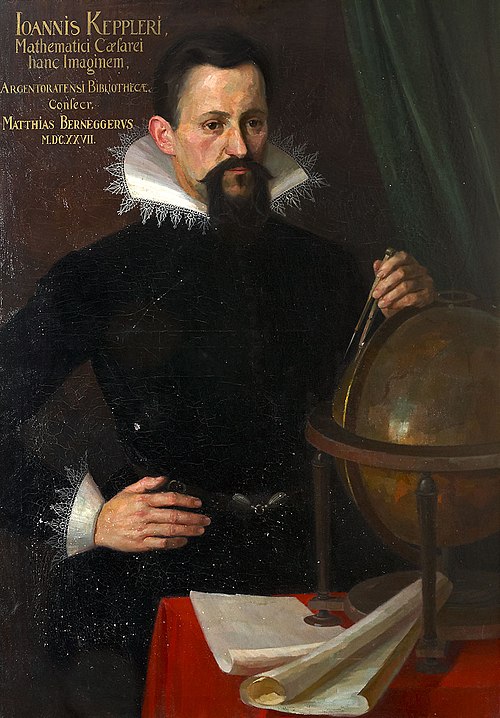
In 1596, Johannes Kepler's sense of proportion for the planetary orbits led him to believe that an undiscovered planet lay between the orbits of Mars and Jupiter.

Giuseppe Piazzi, discoverer of Ceres, the largest object in the asteroid belt: Ceres was known as a planet, but later reclassified as an asteroid and from 2006 as a dwarf planet.

951 Gaspra, the first asteroid imaged by a spacecraft, as viewed during Galileo's 1991 flyby; colors are exaggerated