CIE 1931 color space
Videos
In 1931, the International Commission on Illumination published the CIE 1931 color spaces which define the relationship between the visible spectrum and human colour vision. The CIE color spaces are m

XYZ color matching functions, CIE 1931 and Stockman & Sharpe 2006 (CIE 170-2)
Primary color
Videos
Primary colors are colorants or colored lights that can be mixed in varying amounts to produce a gamut of colors. This is the essential method used to create the perception of a broad range of colors
CIE 1931 color space
…to colorimetry. The CIE color spaces were created using data from a series of experiments, where human test subjects adjusted red, green, and blue primary colors to find a visual match to a second, pure color. The original experiments were conducted in the mid-1920s by William David Wright using ten observers…
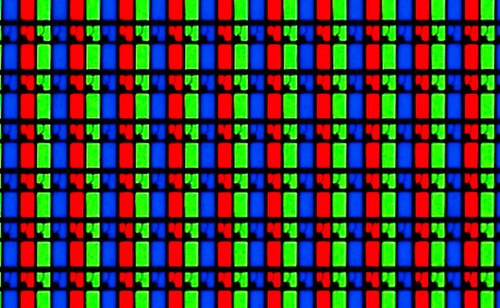
A photograph of the red, green, and blue elements (subpixels) of an LCD. Additive mixing explains how light from these colored elements can be used for photorealistic color image reproduction.

Color Mixing Guide, John L. King 1925, cover and plates describing yellow, red, and blue color mixing

An 1896 self-portrait by Anders Zorn clearly showing a four-pigment palette of what are thought to be white, yellow ochre, vermillion, and black pigments

Johann Heinrich Lambert's "Farbenpyramide" tetrahedron published in 1772. Gamboge (yellow), carmine (red), and Prussian blue pigments are used the corner swatches of each "level" of lightness with mixtures filling the others and white at the top.