CU convoys
Videos
The CU convoys were a World War II series of fast trans-Atlantic convoys to the British Isles. The earliest convoys of the series were tankers sailing directly from petroleum refineries at Curaçao to the United Kingdom. Most convoys of the series assembled in New York City and included fast freighters and troopships, with tankers arriving from Aruba via TAG convoys to Guantánamo Bay and GN convoys from Guantánamo to New York.

CU convoys were designed to protect fast, modern tankers like this mass-produced T2: Hat Creek

Most of the CU and UC convoys were screened by an escort division (CortDiv) of six destroyer escorts like USS Peterson. Peterson teamed with USS Joyce and USS Gandy to sink U-550 after the submarine torpedoed the tanker Pan-Pennsylvania from convoy CU 21.
Mid-ocean escort force
Videos
Mid-Ocean Escort Force (MOEF) referred to the organisation of anti-submarine escorts for World War II trade convoys between Canada and Newfoundland, and the British Isles. The allocation of United States, British and Canadian escorts to these convoys reflected preferences of the United States upon United States' declaration of war and the organisation persisted through the winter of 1942–43 despite withdrawal of United States ships from the escort groups. By the summer of 1943, United States Atlantic escorts were focused on the faster CU convoys and the UG convoys between Chesapeake Bay and the Mediterranean Sea; and only British and Canadian escorts remained on the HX, SC and ON convoys.

HMCS Sackville, preserved at Halifax Harbour, is believed to be the only survivor of the MOEF Flower-class corvettes

United States Coast Guard cutter Ingham, shown here in a post-war configuration, is one of the few larger MOEF escorts to be preserved

USS Reuben James was sunk while escorting convoy HX 156
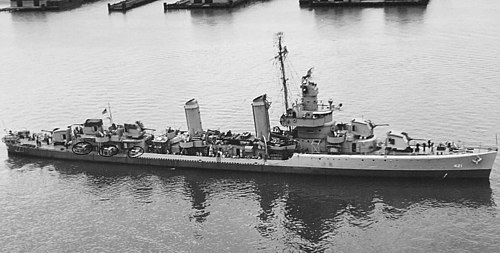
USS Benson was one of the modern United States destroyers initially assigned to MOEF and later diverted to escort troop convoys