Callimachus
Videos
Callimachus was an ancient Greek poet, scholar, and librarian who was active in Alexandria during the 3rd century BC. A representative of Ancient Greek literature of the Hellenistic period, he wrote o
Papyrus fragment from the Aetia of Callimachus


Callimachus is thought to have worked under the patronage of Ptolemy II Philadelphus. This bust of Ptolemy is held at the National Archaeological Museum, Naples.

Callimachus wrote six hymns to gods of the Greek Pantheon, including one to Zeus. This statue of the god was found at Camirus and is housed at the Archaeological Museum of Rhodes.

19th-century artistic rendering of the Library of Alexandria, where Callimachus compiled the Pinakes
Library of Alexandria
Videos
The Library of Alexandria in Alexandria, Egypt, was one of the largest and most significant libraries of the ancient world. The library was part of a larger research institution called the Mouseion, w
Callimachus
…kings of Egypt. After working as a schoolteacher in the city, he came under the patronage of King Ptolemy II Philadelphus and was employed at the Library of Alexandria where he compiled the Pinakes, a comprehensive catalogue of all Greek literature. He is believed to have lived into the reign of Ptolemy III Euergetes…
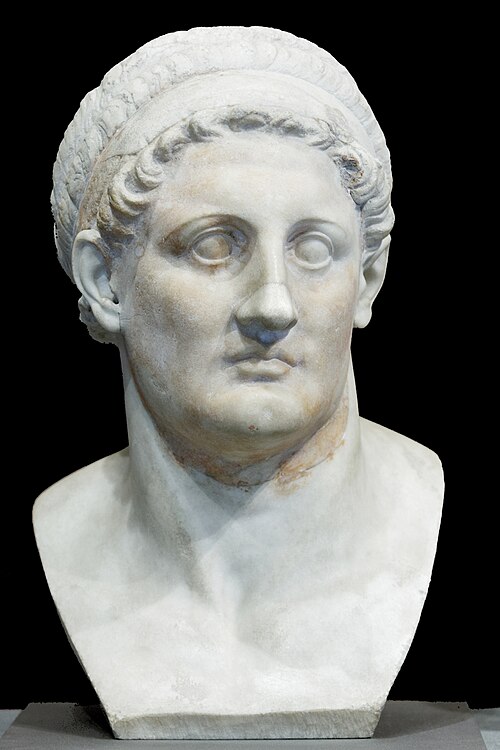
A Hellenistic bust depicting Ptolemy I Soter, 3rd century BC, the Louvre, Paris

A Roman copy of an original 3rd century BC Greek bust depicting Alexander the Great, Ny Carlsberg Glyptotek, Copenhagen