Cambrian
Videos
The Cambrian is the first geological period of the Paleozoic Era and the Phanerozoic Eon. The Cambrian lasted 51.95 million years from the end of the preceding Ediacaran period 538.8 Ma to the beginni

Ediacaran–Cambrian boundary section at Fortune Head, Newfoundland, GSSP
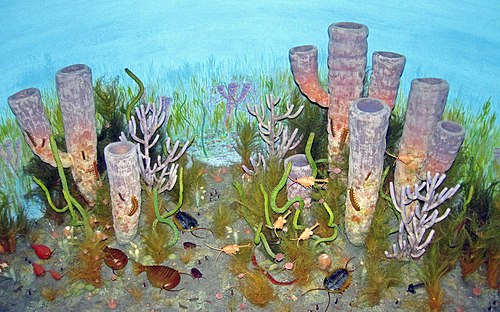
Diorama of the Burgess Shale Biota

Archeocyathids from the Poleta formation in the Death Valley area
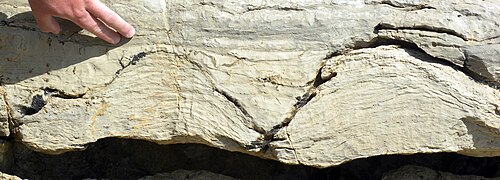
Stromatolites of the Pika Formation (Middle Cambrian) near Helen Lake, Banff National Park, Canada
Precambrian
Videos
The Precambrian is the earliest part of Earth's history, set before the current Phanerozoic Eon. The Precambrian is so named because it preceded the Cambrian, the first period of the Phanerozoic Eon,
Cambrian
…calls for a more precisely defined base to the Cambrian Period. Despite the long recognition of its distinction from younger Ordovician rocks and older Precambrian rocks, it was not until 1994 that the Cambrian system/period was internationally ratified. After decades of careful consideration, a continuous sedimentary…

Weathered Precambrian pillow lava in the Temagami Greenstone Belt of the Canadian Shield
![Landmass positions near the end of the Precambrian[citation needed][original research?]](https://upload.wikimedia.org/wikipedia/commons/thumb/2/22/Positions_of_ancient_continents%2C_550_million_years_ago.jpg/500px-Positions_of_ancient_continents%2C_550_million_years_ago.jpg)
Landmass positions near the end of the Precambrian[citation needed][original research?]