Cannon
Videos
A cannon is a large-caliber gun classified as a type of artillery, which usually launches a projectile using explosive chemical propellant. Gunpowder was the primary propellant before the invention of

Bronze cannon with inscription dated the 3rd year of the Zhiyuan era (1332) of the Yuan dynasty (1271–1368); it was discovered at the Yunju Temple of Fangshan District, Beijing in 1935.
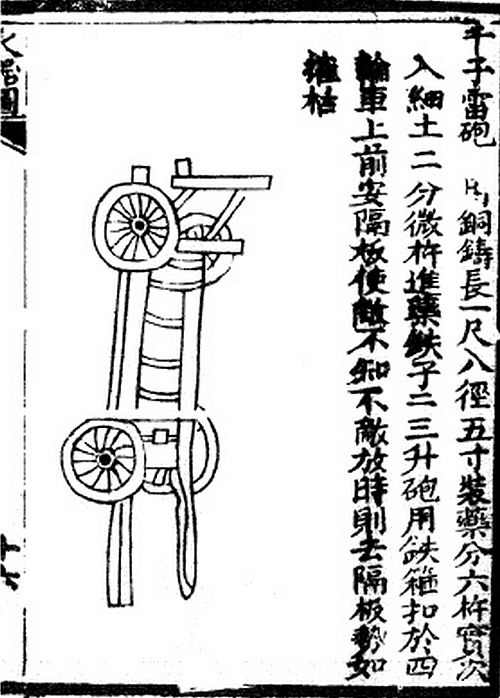
A bronze "thousand ball thunder cannon" from the Huolongjing.

Earliest picture of a European cannon, "De Nobilitatibus Sapientii Et Prudentiis Regum", Walter de Milemete, 1326

Reconstruction of a copper alloy cannon from Grodno, late 14th century
Artillery
Videos
Artillery consists of ranged weapons that launch munitions far beyond the range and power of infantry firearms. Early artillery development focused on the ability to breach defensive walls and fortifi
Cannon
…A cannon (plural either cannons or cannon) is a large-caliber gun classified as a type of artillery, which usually launches a projectile using explosive chemical propellant. Gunpowder ("black powder") was the primary propellant before the invention…

French soldiers in the Franco-Prussian War 1870–71
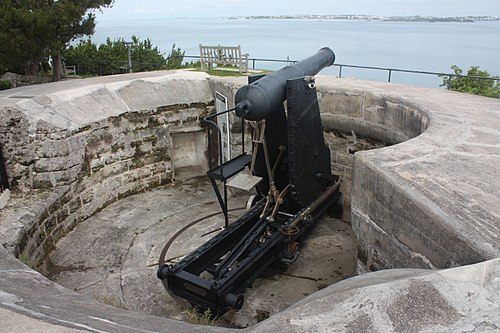
British 64 Pounder Rifled Muzzle-Loaded (RML) Gun on a Moncrieff disappearing mount, at Scaur Hill Fort, Bermuda. This is a part of a fixed battery, meant to protect against over-land attack and to serve as coastal artillery.

7-person gun crew firing a US M777 Light Towed Howitzer, War in Afghanistan, 2009

Artillery illuminating ammunition used in a shooting exercise on Simplon Pass, Switzerland. The illuminated mountain is Mount Fletschhorn, 9 km from the photographer's position.