Cannon operation
Videos
The operation of cannon required specialised crew and gunners, who were first enlisted by the Spanish in the 14th century. The nature of cannon operation often depended on the size of the cannon and w

Cannon in a Civil War re-enactment: Large amounts of gunpowder often affected visibility, and gunners hoped for a strong wind.

Firing of a 6-pound cannon

Mons Meg, a 15th-century cannon

Parts of a cannon, described in John Roberts, The Compleat Cannoniere, London, 1652.
Broadside (naval)
Videos
A broadside is the side of a ship, or more specifically the battery of cannons on one side of a warship or their coordinated fire in naval warfare, or a measurement of a warship's maximum simultaneous
Broadside of a French 74-gun ship of the line
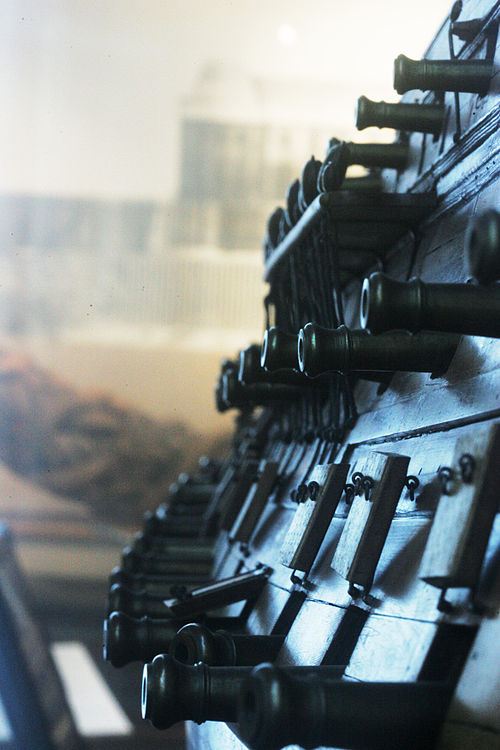

The English warship Mary Rose, one of the earliest warships with a broadside armament; illustration from the Anthony Roll, c. 1546
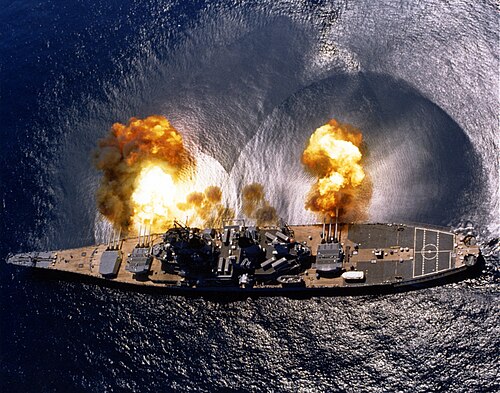
USS Iowa firing her guns broadside (July 1984). Note that intervening structures such as the bridge tower would prevent all of the guns from being focused directly forward or aft.
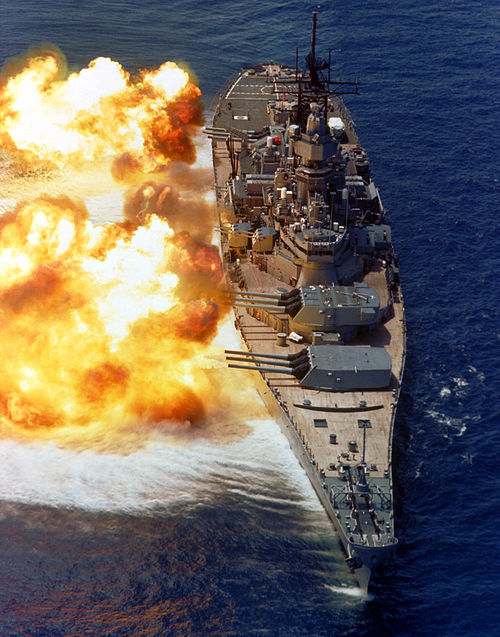
The firepower of a battleship demonstrated by USS Iowa (August 1984). The muzzle blasts are large enough to distort the ocean surface.