Caravaggio
Videos
Michelangelo Merisi da Caravaggio, known mononymously as Caravaggio, was an Italian painter active in Rome for a significant portion of his artistic life. He began his apprenticeship in Milan in 1584,
Chalk portrait of Caravaggio by Ottavio Leoni, c. 1621


Basket of Fruit, c. 1595–1596, oil on canvas, Pinacoteca Ambrosiana, Milan

The Cardsharps, c. 1594, Oil on canvas, Kimbell Art Museum, Fort Worth

The Musicians, 1595–1596, Metropolitan Museum of Art, New York
The Beheading of Saint John the Baptist is an oil painting by the Italian artist Caravaggio. Measuring 3.7 m by 5.2 m, it depicts the execution of John the Baptist. It is located in the Oratory of St.
Caravaggio
…with his success. Wignacourt reportedly gifted some slaves to Caravaggio in recognition for his services. Major works from his Malta period include the Beheading of Saint John the Baptist, his largest ever work, and the only painting to which he put his signature, Saint Jerome Writing (both housed in St John's Co-Cathedral, Valletta…
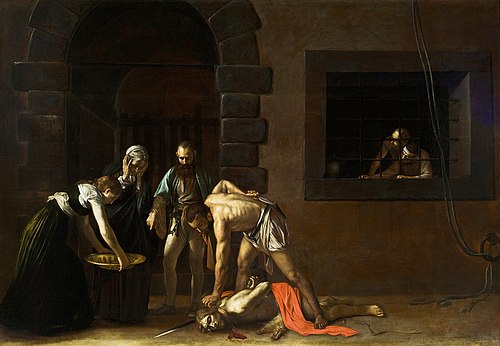
La decapitación de San Juan Bautista, por Caravaggio

Salome with the Head of John the Baptist, Caravaggio (London)

Salome with the Head of John the Baptist, Caravaggio (Madrid)