Caslon Type Foundry
Videos
The Caslon type foundry was a type foundry in London which cast and sold metal type. It was founded by the punchcutter and typefounder William Caslon I, probably in 1720. For most of its history it wa
Painting of William Caslon, founder of the Caslon type foundry, by Francis Kyte. He holds his specimen of his types.

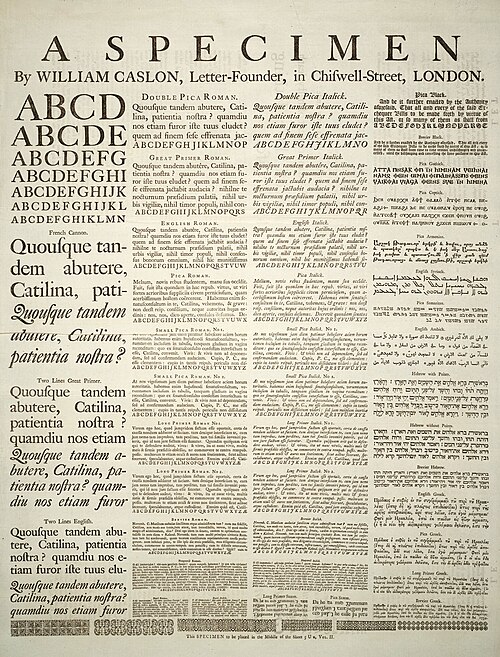
William Caslon's specimen sheet (dated 1734 but actually issued from 1738 onwards). Some of the types shown were not cut by Caslon, most notably the French Canon roman (probably cut by Joseph Moxon)

The Caslon family chest tomb at St Luke's, Old Street

During the late 18th century the poster began to appear, creating a new market for printing. A watercolour of a theatre shows posters outside
Vincent Figgins
Videos
Vincent Figgins was a British typefounder based in London, who cast and sold metal type for printing. After an apprenticeship with typefounder Joseph Jackson, he established his own type foundry in 17

Engraved portrait of Joseph Jackson, Figgins' master

The Common Council Chamber at the Guildhall, pictured in 1808

Radical candidate Henry Hunt (speaking, left) in an 1818 cartoon. Ten years later he unsuccessfully ran against Figgins for election. Figgins described him as a "shameless fellow".

Figgins' 1792 type in the transitional style