Catilinarian conspiracy
Videos
The Catilinarian conspiracy, sometimes Second Catilinarian conspiracy, was an attempted coup d'état by Lucius Sergius Catilina to overthrow the Roman consuls of 63 BC – Marcus Tullius Cicero and Gaius
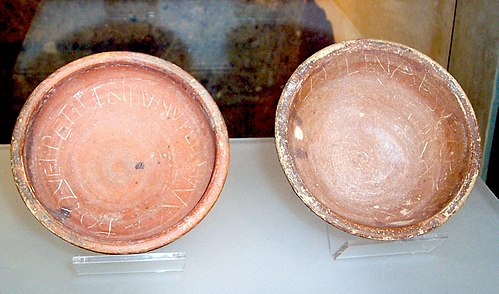
Bowls containing food distributed in electoral canvasses. The bowl to the right was commissioned by Lucius Cassius Longinus and distributed in support of Catiline's consular candidacy in 63 BC. The bowl on the left was distributed by Marcus Porcius Cato in a coeval campaign for the plebeian tribunate.

A 1st century AD depiction of Cicero, one of the consuls in 63 BC and one of the leaders of the response against Catiline, today in the Capitoline Museum.

A denarius minted by Lucius Scribonius Libo in 62 BC. The portrayal of Bonus Eventus on the obverse likely commemorates the repression of Catiline's conspiracy.

A denarius minted by Lucius Aemilius Paullus in 62 BC commemorating Catiline's defeat. It depicts the goddess Concordia, on the left. Berry 2020, p. 54 argues that Paullus attempted to connect Catiline's defeat to peace.
Catiline
Videos
Lucius Sergius Catilina, known in English as Catiline, was a Roman politician and soldier best known for instigating the Catilinarian conspiracy, a failed attempt to seize control of the Roman state i
Catilinarian conspiracy
…The Catilinarian conspiracy, sometimes Second Catilinarian conspiracy, was an attempted coup d'état by Lucius Sergius Catilina (Catiline) to overthrow the Roman consuls of 63 BC – Marcus Tullius Cicero and Gaius Antonius Hybrida – and forcibly assume control of the state in…

Detail of Catiline in Cesare Maccari's fresco (1882–1888) in Palazzo Madama

Alcide Segoni's Discovery of the Body of Catiline (1871). In the Gallery of Modern Art, Florence