Chevau-léger
Videos
Chevau-légers was a generic French name for light cavalry and medium cavalry.
Polish 1st Light Cavalry Regiment of the Imperial Guard during the Battle of Peterswalde.

Lance
Videos
The English term lance is derived, via Middle English launce and Old French lance, from the Latin lancea, a generic term meaning a spear or javelin employed by both infantry and cavalry, with English
Chevau-léger
…as time passed the lighter horsemen were increasingly separated into independent formations of medium cavalry, bearing lighter armour and much shorter lances than the gendarmes. These lighter formations eventually gained the name of "chevau légers". A similar development also happened in the organization of…
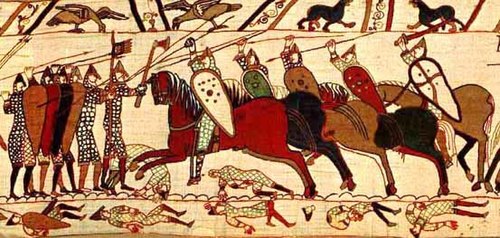
Norman cavalry attacks the Anglo-Saxon shield wall at the Battle of Hastings as depicted in the Bayeux Tapestry. The "lances" depicted here are held with a one-handed over-the-head grip, and so their use is not the same as the "lances" of the later medieval period, when they were fitted with a "grapper" designed to engage a lance rest attached to the wielder's plate armour and used couched in the charge.

Lance head, Warring States period

Warring States lance head (pi)

A lance head from the reenactment of the Eglinton Tournament (1839)