Chinese Buddhism
Videos
Chinese Buddhism or Han Buddhism is a Sinicized form of Mahayana Buddhism, which draws on the Chinese Buddhist canon as well as numerous Chinese traditions. It is the largest institutionalized religio
Buddhist monks at Jintai Temple in Zhuhai, Guangdong


The Daxiong Baodian of Guangde Nunnery, Ningbo, Zhejiang

Interior of the Ling Shan Brahma Palace in Wuxi, Jiangsu

Liao dynasty statue of the Eleven Headed Guanyin in Dule Temple in Tianjin, China.
Tang dynasty
Videos
The Tang dynasty was an imperial dynasty of China that ruled from 618 to 907, with an interregnum between 690 and 705. It was preceded by the Sui dynasty and followed by the Five Dynasties and Ten Kin
Chinese Buddhism
…diaspora. Buddhism was first introduced to China during the Han dynasty (206 BCE – 220 CE). It was promoted by multiple emperors, especially during the Tang dynasty (618–907 CE), which helped it spread across the country. The translation of a large body of Indian Buddhist scriptures with the inclusion of originally…
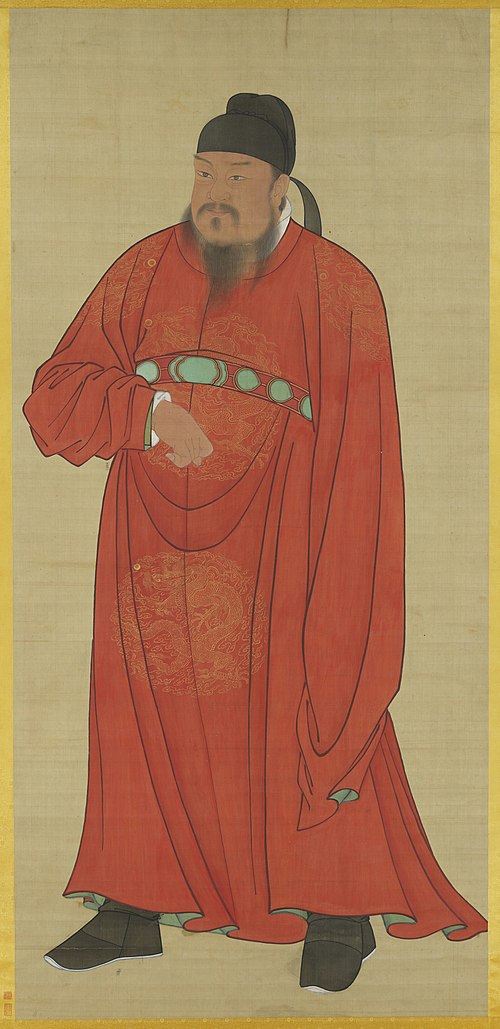
Portrait of Emperor Gaozu of Tang (566–635) dating to the Ming dynasty (1368–1644)
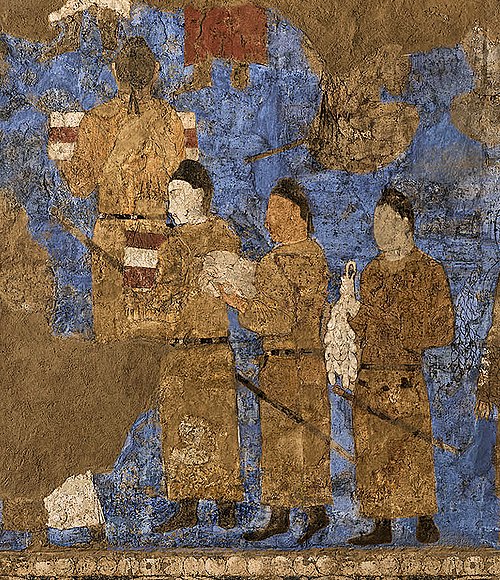
Tang emissaries to the Sogdian king Varkhuman in Samarkand (648–651) – Afrasiab murals

7th-century Sogdian Huteng dancer – Xiuding temple pagoda, Anyang, Henan

Foreign ambassadors visiting the Tang court – the Portraits of Periodical Offering by Yan Liben (601–673)