Chinese Esoteric Buddhism
Videos
Chinese Esoteric Buddhism refers to traditions of Tantra and Esoteric Buddhism that have flourished among the Chinese people. The Tantric masters Śubhakarasiṃha, Vajrabodhi and Amoghavajra, establishe
Liao dynasty statue of the Eleven Headed Guanyin in Dule Temple in Tianjin, China.

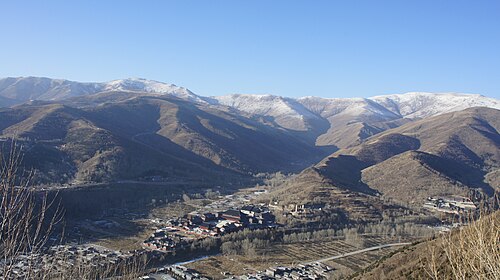
Buddhist temples at Mount Wutai

Portrait of Amoghavajra, fourteenth century, Tokyo National Museum

Mongolian Sita Mahakala (Gonggor), Erdene Zuu Monastery
Vairocana
Videos
Vairocana, also known as Mahāvairocana, is a major Buddha from Mahayana and Vajrayana Buddhism. He is often compared to the Sun, because both bestow their light impartially upon all beings. However, u
A medieval Japanese painting of Vairocana of the Vajradhātu Maṇḍala forming the wisdom-fist mudra.


Tang dynasty statue of Vairocana Buddha in Dragon Gate Caves, China. The statue was completed in the year 676 and is 17.14 m high and has 2 m long ears.

Statue of Vairocana Buddha in Tōdai-ji, Japan

Vairocana Buddha forming Vairocana Mudra while sitting on a thousand-petaled throne, there is a Buddha on each petal of the throne. This is a demonstration of Vairocana's cosmic form and the cosmology of Avatamsaka Sutra.