Chinese philosophy
Videos
Chinese philosophy refers to the philosophical traditions that originated and developed within the historical and cultural context of China. It encompasses systematic reflections on issues such as exi

Yin and Yang symbol with the bagua symbols paved in a clearing outside of Nanning, Guangxi, China

Kong Fuzi (Latin: Confucius)

Chinese glazed stoneware statue of a Daoist deity, from the Ming dynasty, 16th century
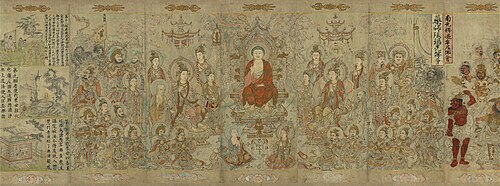
The Sakyamuni Buddha, by artist Zhang Shengwen, 1173–1176 CE, Song dynasty
Confucianism
Videos
Confucianism, also known as Ruism or Ru classicism, is a system of thought and behavior originating in ancient China, and is variously described as a tradition, philosophy, religion, theory of governm
Chinese philosophy
…such as existence, knowledge, ethics, and politics. Evolving over more than two millennia, Chinese philosophy includes classical traditions such as Confucianism, Daoism, and Buddhism, as well as modern responses to Western philosophical currents. As a cultural form of philosophy, it addresses universal philosophical…

Temple of Confucius of Jiangyin, Wuxi, Jiangsu. It is a wenmiao (文庙), a temple where Confucius is worshipped as Wendi, "God of Culture" (文帝).
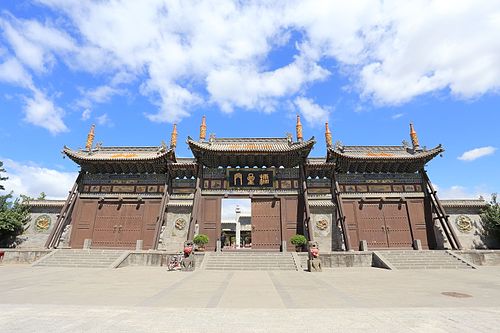
Gates of the wenmiao of Datong, Shanxi

Confucius in a fresco from a Western Han tomb in Dongping, Shandong

Worship at the Great Temple of Lord Zhang Hui (张挥公大殿; Zhāng Huī gōng dàdiàn), the cathedral ancestral shrine of the Zhang lineage corporation, at their ancestral home in Qinghe, Hebei