Chonmage
Videos
The chonmage is a type of traditional Japanese topknot haircut worn by men. It is most commonly associated with the Edo period and samurai, and in recent times with sumo wrestlers. It was originally a
A 19th-century samurai with a chonmage


A Japanese barbershop in the 19th century

Modern sumo wrestler Tochiazuma with an ōichō-style chonmage
Rōnin
Videos
In feudal Japan to early modern Japan, a rōnin was a samurai who had no lord or master and, in some cases, had also severed all links with his family or clan. A samurai became a rōnin upon the death o
Chonmage
…the chonmage ("topknot") was dependent on the social status of the wearer, with that of the samurai being more pronounced than artisans or merchants. Ronin, samurai who did not serve a Lord, were not required to shave their heads. This became an easy way to identify such men. Under the Meiji Restoration…

A woodblock print by ukiyo-e master Utagawa Kuniyoshi depicting famous rōnin Miyamoto Musashi having his fortune told
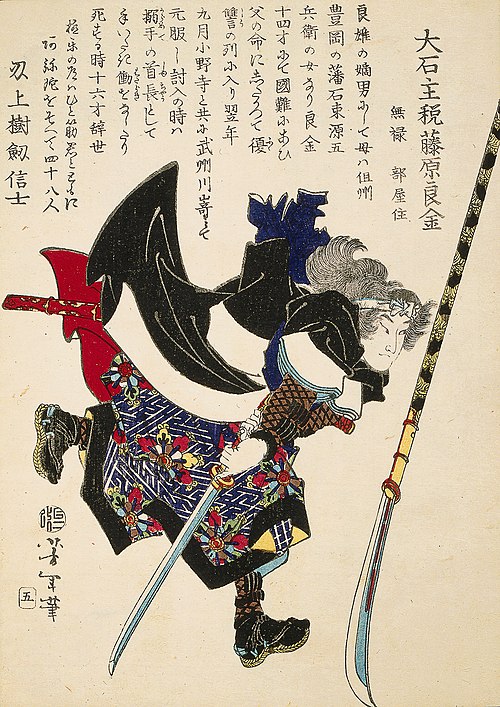
Ukiyo-e woodblock print by Yoshitoshi depicting Oishi Chikara, one of the forty-seven rōnin

Graves of the forty-seven rōnin at Sengaku-ji

Actors portraying ronin on left and right, employed samurai in the middle. His chonmage makes him identifiable as an employed samurai.