Christian Wolff (philosopher)
Videos
Photos
Christian Wolff was a German philosopher. Wolff is characterized as one of the most eminent German philosophers between Leibniz and Kant. His life work spanned almost every scholarly subject of his time, displayed and unfolded according to his demonstrative-deductive, mathematical method, which some deem the peak of Enlightenment rationality in Germany.

Christian Wolff (philosopher)
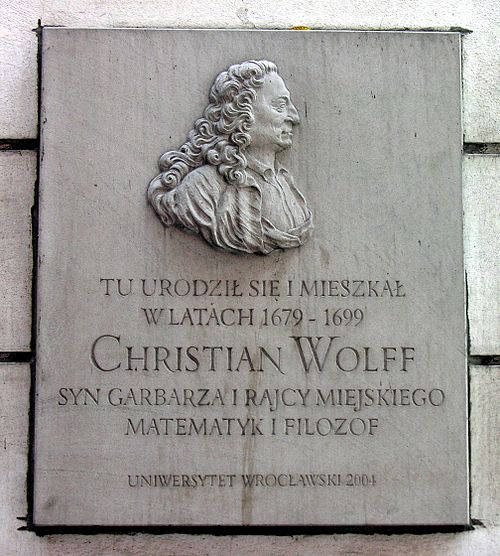
Plaque on building in Wrocław (Breslau) where Wolff was born and lived, 1679–99

Delftware plaque with chinoiserie, 17th century

Elementa matheseos universae, 1746
German philosophy
Videos
Photos
German philosophy, meaning philosophy in the German language or philosophy by German people, in its diversity, is fundamental for both the analytic and continental traditions. It covers figures such as Gottfried Wilhelm Leibniz, Immanuel Kant, Georg Wilhelm Friedrich Hegel, Karl Marx, Friedrich Nietzsche, Martin Heidegger, Ludwig Wittgenstein, the Vienna Circle, and the Frankfurt School, who now count among the most famous and studied philosophers of all time. They are central to major philosophical movements such as rationalism, German idealism, Romanticism, dialectical materialism, existentialism, phenomenology, hermeneutics, logical positivism, and critical theory. The Danish philosopher Søren Kierkegaard is often also included in surveys of German philosophy due to his extensive engagement with German thinkers.

From left to right: Georg Wilhelm Friedrich Hegel, Friedrich Nietzsche, Theodor W. Adorno, Karl Marx.

Leibniz
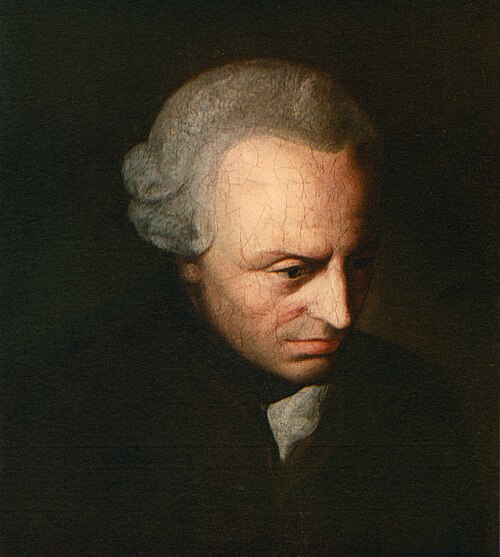
Immanuel Kant

Johann Gottlieb Fichte (1762–1814)