Civil Rights Act of 1957
Videos
The Civil Rights Act of 1957 was the first federal civil rights law passed by the United States Congress since the Civil Rights Act of 1875. The bill was passed by the 85th United States Congress and
President Dwight D. Eisenhower signing the Civil Rights Act of 1957 on September 9, 1957

Civil Rights Act of 1964
Videos
The Civil Rights Act of 1964 is a landmark civil rights and labor law in the United States that outlaws discrimination based on race, color, religion, sex, and national origin. It prohibits unequal ap
Civil Rights Act of 1957
…of Justice Civil Rights Division. Congress would later pass far more effective civil rights laws in the form of the Civil Rights Act of 1960, the Civil Rights Act of 1964, the Voting Rights Act of 1965, and the Civil Rights Act of 1968. Following the Supreme Court ruling in Brown, which eventually led to the integration…

U.S. president John F. Kennedy addresses the nation on civil rights in a speech on June 11, 1963.

Following the March on Washington on August 28, 1963, civil rights leaders met with President Kennedy and Vice President Johnson to discuss civil rights legislation.
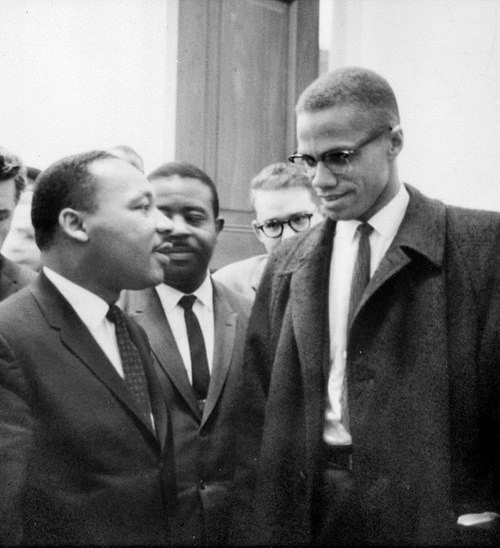
Activists Martin Luther King Jr. and Malcolm X at the United States Capitol on March 26, 1964, listening to the Senate debate on the bill. The two met for only one minute.
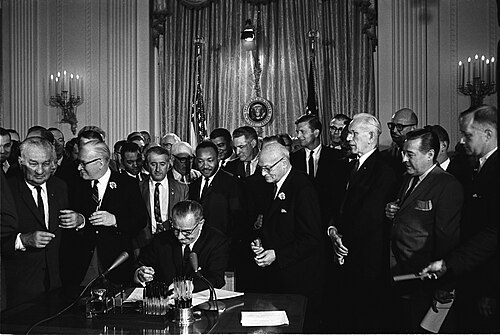
U.S. president Lyndon B. Johnson signs the Civil Rights Act of 1964. Among the guests behind him is Martin Luther King Jr.