Clarenceux King of Arms, historically often spelled Clarencieux, is an officer of arms at the College of Arms in London. Clarenceux is the senior of the two provincial kings of arms and his jurisdiction is that part of England south of the River Trent. The office almost certainly existed in 1420, and there is a fair degree of probability that there was a Claroncell rex heraldus armorum in 1334. There are also some early references to the southern part of England being termed Surroy, but there is not firm evidence that there was ever a king of arms so called. The title of Clarenceux is supposedly derived from either the Honour of the Clare earls of Gloucester, or from the Dukedom of Clarence (1362). With minor variations, the arms of Clarenceux have, from the late fifteenth century, been blazoned as Argent a Cross on a Chief Gules a Lion passant guardant crowned with an open Crown Or.
Clarenceux King of Arms Thomas Hawley in a 1556 grant of arms
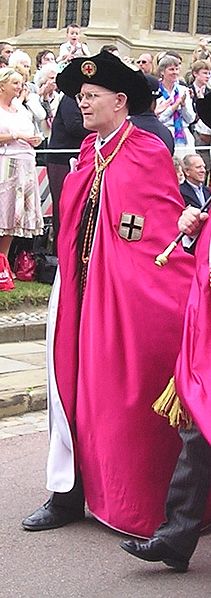
The former Clarenceux King of Arms, Patric Dickinson, on Garter Day, dressed in the robe of the Secretary of the Order of the Garter
Enamelled plaque of Thomas Tonge inscribed 1554 "The armys of the ryght worshepful Maister Tonge otherwyse called Maister Clarencivs and mesteris Susan hys wyfe"
King of arms is the senior rank of an officer of arms. In many heraldic traditions, only a king of arms has the authority to grant armorial bearings and sometimes certify genealogies and noble titles. In other traditions, the power has been delegated to other officers of similar rank.
King during the solemn funeral of Albert VI of Austria
Louis d'Ursel was the King of Arms of Flanders
Banners of the arms of office of the three current English kings of arms. Visible are the banners of Norroy and Ulster King of Arms, Clarenceux King of Arms, and Garter Principal King of Arms.
Thomas Hawley, Clarenceux King of Arms, wearing a tabard bearing the royal arms of England and holding a white staff of office