Classical Anatolia
Videos
Classical Anatolia is Anatolia during classical antiquity. Early in that period, Anatolia was divided into several Iron Age kingdoms, most notably Lydia in the west, Phrygia in the center and Urartu i

Oriental empires c. 600 BC

The archaeological site of Sardis, today known as Sart in Turkey

Medusa head mosaic in Cibyra

A Greek mercenary (left) in the service of an Achaemenid Dynast of Hellespontine Phrygia (center) attacking a Greek psiloi (right) at the time of Pharnabazus II, Altıkulaç Sarcophagus, early 4th century BC
Turkey
Videos
Turkey, officially the Republic of Türkiye, is a country mainly located in Anatolia in West Asia, with a smaller part called East Thrace in Southeast Europe. It borders the Black Sea to the north; Geo
Classical Anatolia
…with the western Anatolian city of Sardis. The fall of Lydia (546 BC) and the Lydian revolt The archaeological site of Sardis, today known as Sart in Turkey By 550 BC Lydia controlled the Greek coastal cities, who paid tribute, and most of Anatolia, except Lycia, Cilicia and Cappadocia. In 547 BC, King…
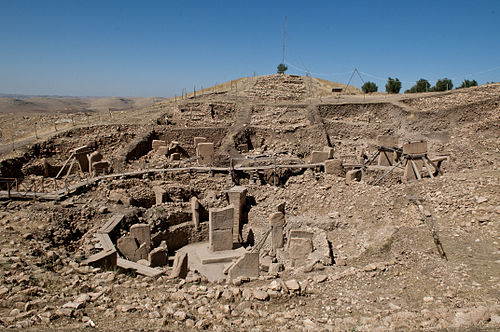
Some henges at Göbekli Tepe were erected as far back as 9600 BC, predating those of Stonehenge by over seven millennia.

The Lycian Way is a 760 kilometers (470 mi) long hiking path in Southwestern Turkey.

The Library of Celsus in Ephesus was built by the Romans in 114–117.

The Hagia Sophia in Constantinople (now Istanbul) was built by the Eastern Roman emperor Justinian the Great in 532–537.