Classification of swords
Videos
The English language terminology used in the classification of swords is imprecise and has varied widely over time. There is no historical dictionary for the universal names, classification, or termin
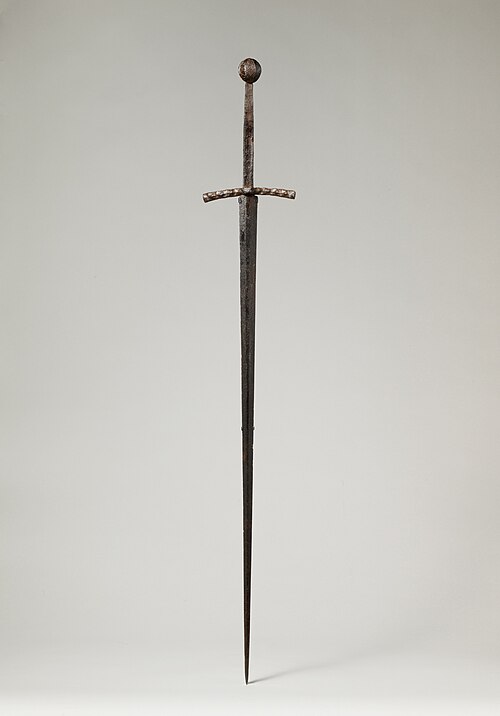
Hand-and-a-half sword, probably German, c. 1400–1430
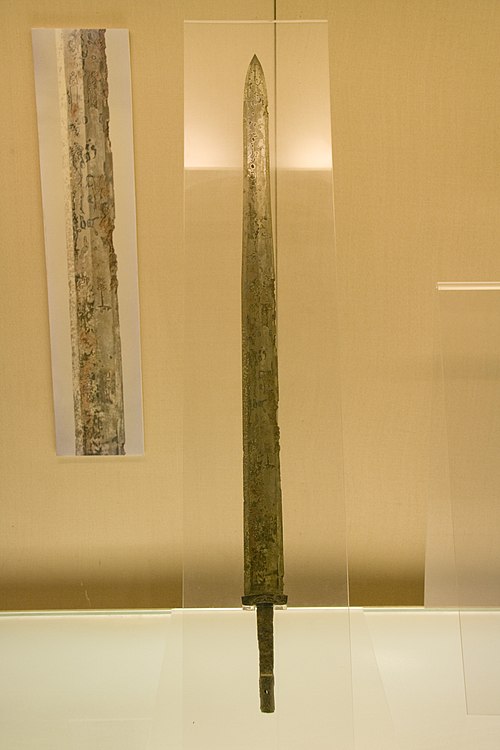
Warring States era jian (double edged sword)
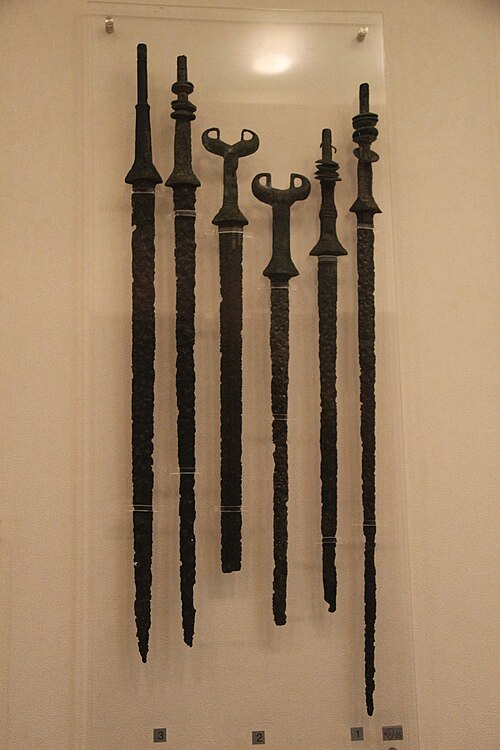
Han dynasty Jian swords (above)
Longsword
Videos
A longsword is a type of European sword characterized as having a cruciform hilt with a grip for primarily two-handed use, a straight double-edged blade of around 80 to 110 cm, and weighing approximat
Classification of swords
…swords were designed for left-hand use, although left-handed swords have been described as "a rarity". Great swords or greatswords are related to the long swords of the Middle Ages. The great sword was developed during the Renaissance, but its earlier cousin the Scottish Claymore was very similar in size and…

Replica of the Brescia Spadona, a 15th-century "hand and a half" longsword named after the city where it now resides, in the Museo Civico L. Mazzoli in Brescia, Italy. It has a tapered type XVIIIa or type XVIa blade and an octagonal pommel.

1440s illustration of one- and two-handed use of the longsword. Note the sword being used one-handed is drawn shorter and may also be intended as a large knightly sword (CPG 339 fol. 135r).

Example of two handed use vs. half-sword, dating to c. 1418 (CPG 359, fol. 46v)