Clerical fascism
Videos
Clerical fascism is an ideology that combines the political and economic doctrines of fascism with clericalism. The term has been used to describe organizations and movements that combine religious el

Mussolini (far right) signing the Lateran Treaty (Vatican City, 11 February 1929)

Roman Catholic priest Jozef Tiso (right), who was president of the Slovak Republic, a client state of Nazi Germany

Catholic prelates led by Archbishop Aloysius Stepinac at the funeral of Marko Došen, one of the senior Ustaše leaders, in September 1944

Lapua Movement members praying, Vihtori Kosola in the middle
Fatherland Front (Austria)
Videos
The Fatherland Front was the ruling political organisation of the Federal State of Austria. It claimed to be a nonpartisan movement, and aimed to unite all the people of Austria, overcoming political
Clerical fascism
…Examples of political movements which incorporate certain elements of clerical fascism into their ideologies include: the Fatherland Front in Austria led by Austrian Catholic Chancellors Engelbert Dollfuss and Kurt Schuschnigg. the Rexist Party in Belgium led by Léon Degrelle, a Belgian…

Fatherland Front rally, 1936
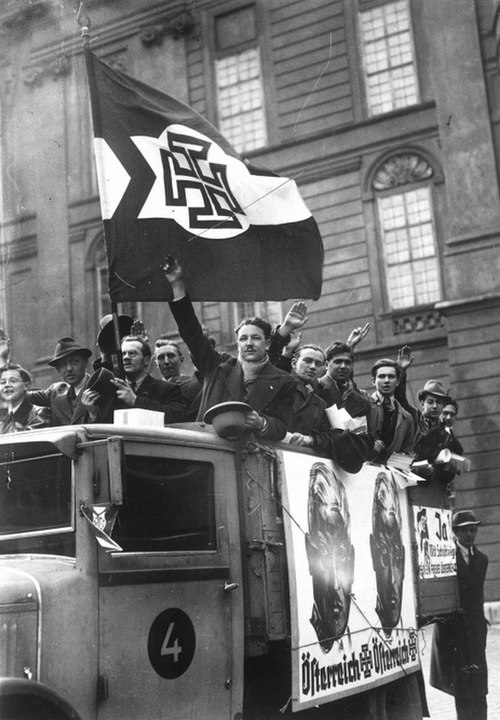
Truck with supporters of Schuschnigg (pictured on the posters) campaigning for the independence of Austria, March 1938 (shortly before the Anschluss)