The Co-operative Commonwealth Federation was a federal democratic socialist and social-democratic political party in Canada. The CCF was founded in 1932 in Calgary, Alberta, by the merger of several s

CCF founding meeting, Calgary, 1932

Federal CCF Caucus, in 1942 with new leader M.J. Coldwell. Left to right, Tommy Douglas, George Hugh Castleden, Angus MacInnis, Coldwell, Clarie Gillis, Joseph W. Noseworthy, Sandy Nicholoson, and Percy Wright.

Four past and future national chairmen in September 1944: national CCF delegation attending the Conference of Commonwealth Labour Parties in London, England. Pictured from left to right: Clarie Gillis, MP for Cape Breton South; David Lewis, national secretary; M. J. Coldwell, national leader, MP for Rosetown—Biggar; Percy E. Wright, MP for Melfort; and F. R. Scott, national chairman.

"Towards the Dawn!" – a 1930s promotional image from Saskatchewan
New Democratic Party
Videos
The New Democratic Party is a federal political party in Canada. Widely described as social democratic and democratic socialist, the party sits at the centre-left to left-wing of the Canadian politica
Co-operative Commonwealth Federation
…The full, but little used, name of the party was Co-operative Commonwealth Federation (Farmer-Labour-Socialist). In 1961, the CCF was succeeded by the New Democratic Party (NDP). The CCF aimed to alleviate the suffering that workers and farmers, the ill and the old endured under capitalism, seen most starkly during the…
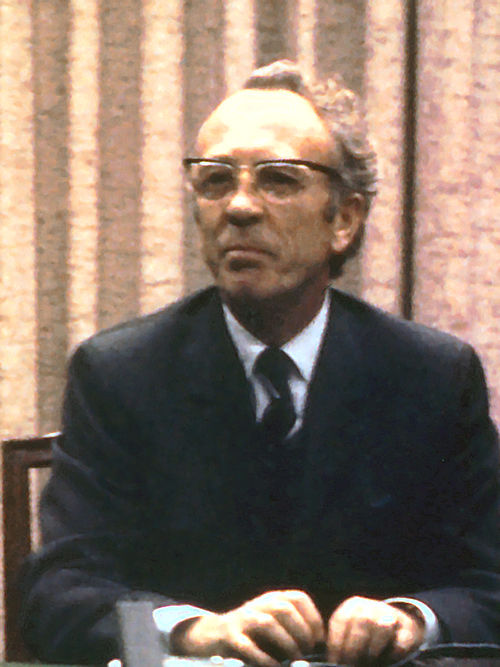
Tommy Douglas, leader of the NDP from 1961 to 1971

Ed Broadbent, leader of the NDP from 1975 to 1989

Jack Layton was the first leader of the NDP to become Leader of the Official Opposition.

Tom Mulcair