Coastal fish
Videos
Coastal fish, also called inshore fish or neritic fish, inhabit the sea between the shoreline and the edge of the continental shelf. Since the continental shelf is usually less than 200 metres deep, i

Schooling threadfin, a coastal species

The rise and fall of tides on a seashore defines an intertidal zone

Intertidal zones can be a volatile habitat for fish

Australian blenny
Pelagic fish
Videos
Pelagic fish live in the pelagic zone of ocean or lake waters—being neither close to the bottom nor near the shore—in contrast with demersal fish that live on or near the bottom, and reef fish that ar
Coastal fish
…between the shoreline and the edge of the continental shelf. Since the continental shelf is usually less than 200 metres (660 ft) deep, it follows that pelagic coastal fish are generally epipelagic fish, inhabiting the sunlit epipelagic zone. Coastal fish can be contrasted with oceanic fish or offshore fish…

A school of large pelagic predator fish (bluefin trevally) sizing up a school of small pelagic prey fish (anchovies)
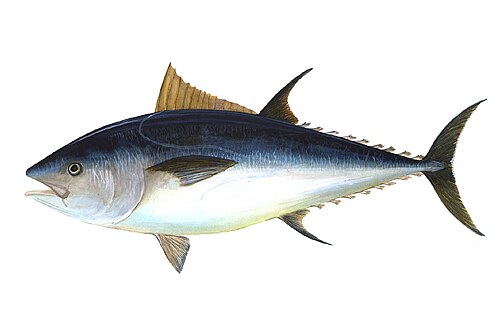
Large epipelagic predator fish, such as this Atlantic bluefin tuna, have a deeply forked tail and a smooth body shaped like a spindle tapered at both ends and countershaded with silvery colours.

Drifting Sargassum seaweed provides food and shelter for small epipelagic fish. The small round spheres are floats filled with carbon dioxide which provide buoyancy to the algae.

Great barracuda accompanied by a school of jacks