Coffee wars, sometimes referred to as caffeine wars, involve a variety of sales and marketing tactics by coffeehouse chains and espresso machine manufacturers to increase brand and consumer market share. In North America belligerents in these wars typically include large coffeehouses, such as Starbucks, Dunkin', McDonald's, and Tim Hortons. According to The Economist, the largest coffee war of the late 2000s was between Starbucks and McDonalds in the United States. The U.S. market has, since the early 2010s, been primarily contested by its two largest players, Starbucks and Dunkin'. Since 2020, competition over the Chinese coffee market has intensified between Starbucks and Luckin Coffee.
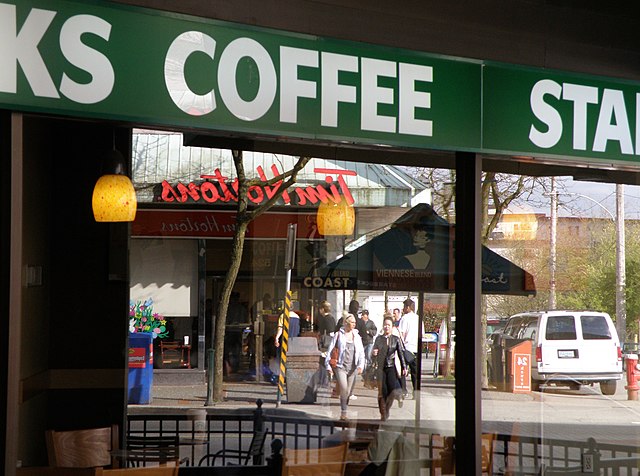
Most coffee wars for consumer market share involve the largest coffeehouse, Starbucks, pictured here reflecting a sign for Tim Hortons in New Westminster, Canada.
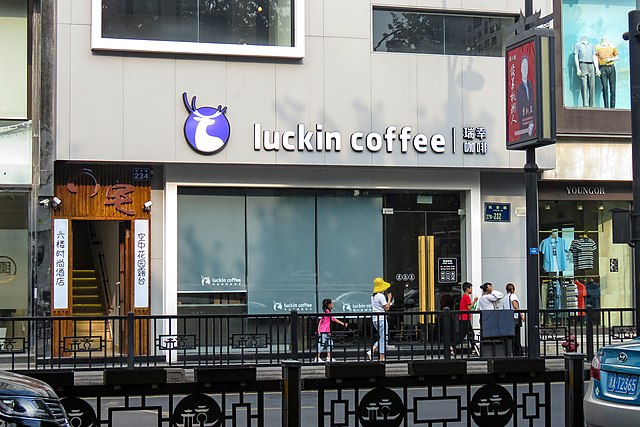
Since 2020, Luckin Coffee has been China's largest coffee chain by store count.
Rival outlets on Cheapside in London, England
A cup of Dunkin' coffee, 2017
An espresso machine brews coffee by forcing pressurized water near boiling point through a "puck" of ground coffee and a filter in order to produce a thick, concentrated coffee called espresso. Multiple machine designs have been created to produce espresso. Several machines share some common elements, such as a grouphead and a portafilter. An espresso machine may also have a steam wand which is used to steam and froth liquids for coffee drinks such as cappuccino and caffè latte.
A typical, pump-driven consumer espresso machine
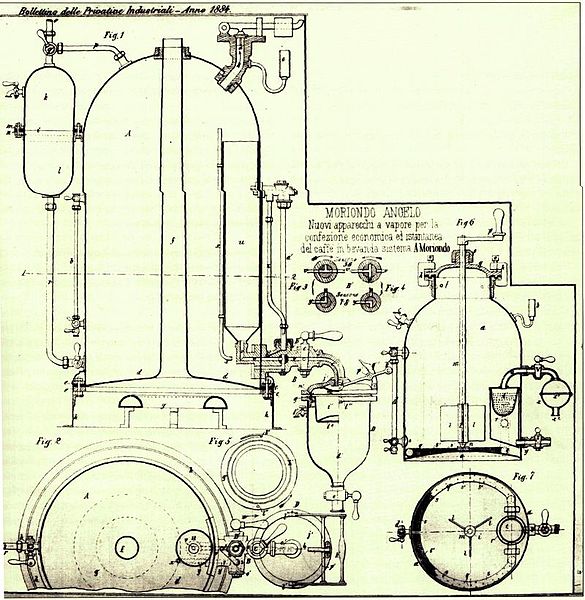
First patent (vol. 33 n. 256, 1884) for the Espresso Machine, by Angelo Moriondo
An espresso machine from East Germany, 1954
Bezzera Eagle 2 Coffee Maker, presented at Central Cafe Budapest