In World War II, many individuals, organizations, and client and puppet states engaged in wartime collaboration with the Axis powers, "out of conviction, desperation, or under coercion". Nationalists
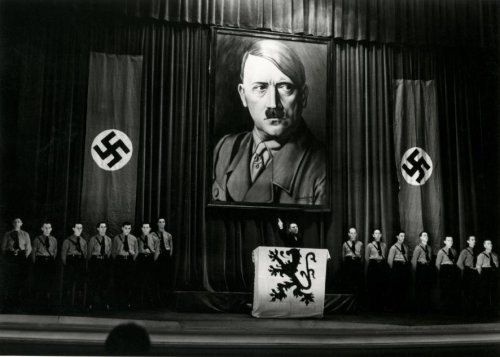
A Vlaamsch Nationaal Verbond (VNV) meeting in Ghent in 1941

Members of Free Corps Denmark leaving for the Eastern Front from Copenhagen's Hellerup station

HQ of the SS-Schalburgkorps in Copenhagen in 1943

Leader (Chef) of Vichy France Marshal Philippe Pétain meeting Hitler at Montoire, 24 October 1940. (Hitler's interpreter, Dr Paul Schmidt, stands between them, while Joachim von Ribbentrop, the German foreign minister, stands to the right.)
Vidkun Quisling
Videos
Vidkun Abraham Lauritz Jonssøn Quisling was a Norwegian military officer, politician and Nazi collaborator who headed the puppet government of Norway during the country's occupation by Nazi Germany du
Collaboration with Nazi Germany and Fascist Italy
…Many of them were members of the NSB. The column alone was responsible for the arrest of about 900 Jews. In Norway, the national government, headed by Vidkun Quisling, was installed by the Germans as a puppet regime during the German occupation, while king Haakon VII and the legally elected Norwegian government fled…

Quisling, c.1919

Vidkun Quisling (far left) with his family, c.1915

Quisling and his second wife, Maria

The Armenia commission of the League of Nations. 19 June 1925. From left, sitting, are C.E. Dupuis, Fridtjof Nansen, and G. Carle; standing are Pio Le Savio, and Vidkun Quisling.