Colombian conflict
Videos
The Colombian conflict began on May 27, 1964, and is a low-intensity asymmetric war between the government of Colombia, far-right paramilitary groups, crime syndicates and far-left guerrilla groups fi
Top left: FARC guerrillas during the Caguán dialogues. Top right: Displaced people. Center left: National Police during the Palace of Justice siege. Center right: Death of Pablo Escobar. Bottom left: Peace talks during the government of Juan Manuel Santos. Bottom right: Fredy Iturre Klínger (center) cries after seeing his half-brother killed in the Battle of Gutiérrez, 1999.


Colombian soldier
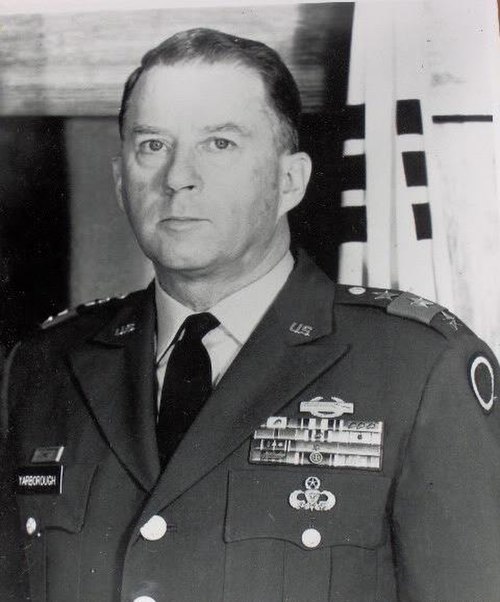
US General William P. Yarborough was the head of a counterinsurgency team sent to Colombia in 1962 by the US Special Warfare Center.

The Memorial for Life and Center for Peace, Memory, and Reconciliation, located in Peace and Memory Park. In Colombia, April 9 is a symbolic day. It is a day of remembrance and solidarity with the conflict's victims.
The Revolutionary Armed Forces of Colombia – People's Army was a far-left Marxist–Leninist guerrilla group involved in the continuing Colombian conflict starting in 1964. The FARC–EP was officially fo
Colombian conflict
…and in the aftermath of the anti-communist repression in rural Colombia in the 1960s that led Liberal and Communist militants to re-organize into the Revolutionary Armed Forces of Colombia (FARC). The reasons for fighting vary from group to group. The FARC and other guerrilla movements claim to be fighting for the rights of the impoverished…

FARC guerrillas marching in formation during the Caguan peace talks (1998–2002)

FARC commanders during the Caguan peace talks (1998–2002)
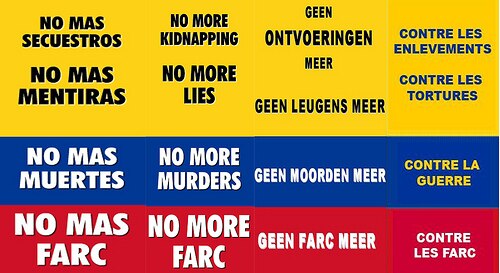
Banner of the February 2008 anti-FARC rallies with slogans in Spanish, English, Dutch, and French. In the French version "contre la torture" and "contre la guerre" mean "against torture" and "against the war" respectively.

Former second-in-command FARC leader, Iván Márquez, who called for renewed actions against the Colombian government