Colonia Juárez, Mexico City
Videos
Colonia Juárez is one of the better-known neighborhoods or colonias in the Cuauhtémoc borough of Mexico City. The neighborhood is shaped like a long triangle with the boundaries: Paseo de la Reforma o

Genova Street in Zona Rosa

Clock tower on Bucareli Street

Porfirian-era mansion, today the Wax Museum

Luis Spota Art Education Center
Paseo de la Reforma
Videos
Paseo de la Reforma is a wide avenue that runs diagonally across the heart of Mexico City. It was designed at the behest of Emperor Maximilian by Ferdinand von Rosenzweig during the era of the Second
Colonia Juárez, Mexico City
…better-known neighborhoods or colonias in the Cuauhtémoc borough of Mexico City. The neighborhood is shaped like a long triangle with the boundaries: Paseo de la Reforma on the north, Avenida Chapultepec on the south, and Eje 1 Poniente (Avenida Bucareli) on the east. It is located between the historic center of Mexico…

Paseo de la Reforma as seen from Chapultepec Castle
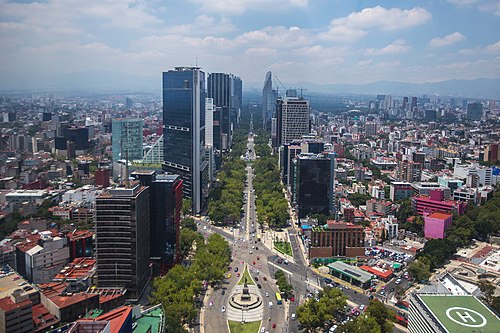
Paseo de la Reforma skyline

Ornate King Charles IV of Spain statue of the Paseo de la Reforma in the 19th century.

Another 19th century photo now showing Monument to Columbus (1877)