Color in Chinese culture
Videos
Chinese culture attaches certain values to colors, such as considering some to be auspicious or inauspicious. The Chinese word for 'color' is yánsè. In Literary Chinese, the character 色 more literally
Portrait of the Hongwu Emperor in a silk yellow dragon robe embroidered with the Yellow Dragon


The Yellow River at Sanmenxia

The Yellow River Breaches its Course by Ma Yuan (1160–1225), Song dynasty

Yellow tiles and figures on the roof the Hall of Supreme Harmony in the Forbidden City
Vermilion
Videos
Vermilion is a color family and toxic pigment most often used between antiquity and the 19th century and made from the powdered mineral cinnabar. It is synonymous with red orange.
Color in Chinese culture
…Ever since the reform and opening up and influx of Western cultural values, white wedding gowns have become more popular. Red (紅; 红 hóng), vermilion (丹 dān), and scarlet (赤 chì) are associated with good fortune, wealth, happiness, masculine yang energy, and fire. Red is the traditional color used…
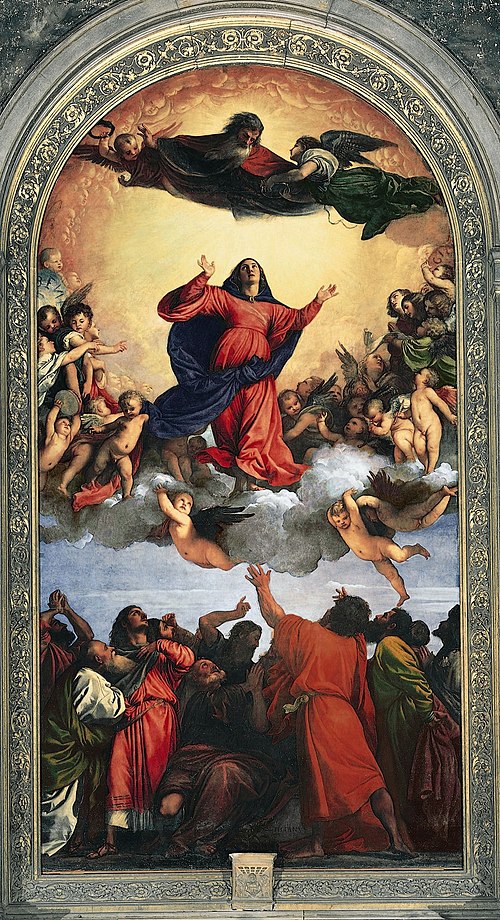
The Venetian painter Titian used vermilion for dramatic effect. In the Assumption of the Virgin (1516–18), the vermilion robes draw the eye to the main characters.

A Chinese "cinnabar red" carved lacquer box from the Qing dynasty (1736–1795), National Museum of China, Beijing

Cinnabar crystals from the Almaden Mine in northern California

Cinnabar crystals on dolomite from Tongren Prefecture, Guizhou, China