Commodity fetishism
Videos
In Marxist philosophy, commodity fetishism is a belief that social aspects of economic goods are inherent to them, rather than being expressions of social relations in which goods and their underlying

Commodity fetishism: In the economics of the marketplace, producers and consumers perceive each other by means of the money and goods that they exchange.

A South African fetish figurine whose supernatural powers protect the owner and kin in the natural world (c. 1900)
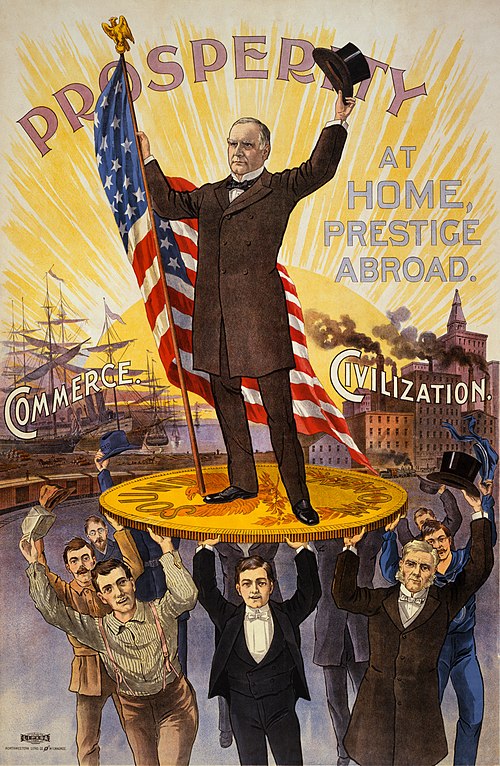
A political poster shows gold coin as the basis of prosperity (c. 1896).

The Hungarian philosopher György Lukács developed Karl Marx's theory of commodity fetishism to develop reification theory.
Marx's theory of alienation
Videos
Marx's theory of alienation describes the estrangement of people from aspects of their essential human nature as a consequence of living in a society structured by private property and wage labour. De
Commodity fetishism
…reducible to quantities of human labour, although the worker has no control over what happens to the commodities that they produce. (See: Entfremdung, Marx's theory of alienation) The concept of the intrinsic value of commodities (goods and services) determines and dominates the economic (business) relationships among people…

Georg Friedrich Wilhelm Hegel

Depiction of the young Karl Marx

Page from the Economic and Philosophic Manuscripts of 1844

The Ford Motor Company assembly line in 1913, an example of the capitalist division of labour that intensifies alienation. Workers perform repetitive, fragmented tasks, losing control over the production process and the final product.