The Communist Party of the Soviet Union, also known at some points as the Russian Communist Party, the All-Union Communist Party, the Bolshevik Party, and the Soviet Communist Party, was the founding

A neighborhood in the Kozhukhovsky Bay of the Moskva River with a large sign promoting the Communist Party of the Soviet Union, Moscow, 1975

Vladimir Lenin, founder of the Soviet Union and the leader of the Bolshevik party.

Josef Stalin led the Soviet Union from the late 1920s until his death in 1953, rapidly industrializing the country during the global Great Depression and leading the military defeat of Germany during World War II. After his death, the repressive aspects of his leadership were criticized by the party and became a divisive matter for the rest of its history.
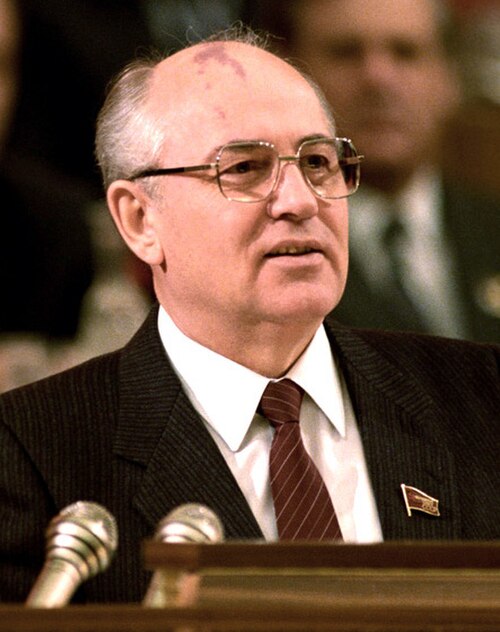
Mikhail Gorbachev, the last leader of the CPSU and the Soviet Union, implemented major reforms to restructure the economy and state which would prove fatal for both.
Vladimir Lenin
Videos
Vladimir Ilyich Ulyanov, better known as Vladimir Lenin, was a Russian revolutionary, politician, and political theorist. He served as the first and founding head of government of Soviet Russia from 1
Communist Party of the Soviet Union
…Democratic Labour Party (RSDLP). In 1903, that party split into a Menshevik (m) ("minority") and Bolshevik (b) ("majority") faction; the latter, led by Vladimir Lenin, is the direct ancestor of the CPSU and is the party that seized power in the October Revolution of 1917. Its activities were suspended on Soviet…

Lenin in 1920

Lenin (left) at the age of three with his sister, Olga

Lenin was influenced by the works of Karl Marx.

Police mugshot of Vladimir Lenin, 1895