Competition (economics)
Videos
In economics, competition is a scenario where different economic firms are in contention to obtain goods that are limited by varying the elements of the marketing mix: price, product, promotion and pl

Adjacent advertisements in an 1885 newspaper for the makers of two competing ore concentrators (machines that separate out valuable ores from undesired minerals). The lower ad touts that their price is lower, and that their machine's quality and efficiency was demonstrated to be higher, both of which are general means of economic competition.

Airlines competing for Europe-Japan passenger flight market: Swiss and SAS

The printing equipment company American Type Founders explicitly states in its 1923 manual that its goal is to 'discourage unhealthy competition' in the printing industry.
Monopoly
Videos
A monopoly is a market in which one person or company is the only supplier of a particular good or service. A monopoly is characterized by a lack of economic competition to produce a particular thing,
Competition (economics)
…selection of a good is in the market, the lower prices for the products typically are, compared to what the price would be if there was no competition (monopoly) or little competition (oligopoly). The level of competition that exists within the market is dependent on a variety of factors on both the firm and…
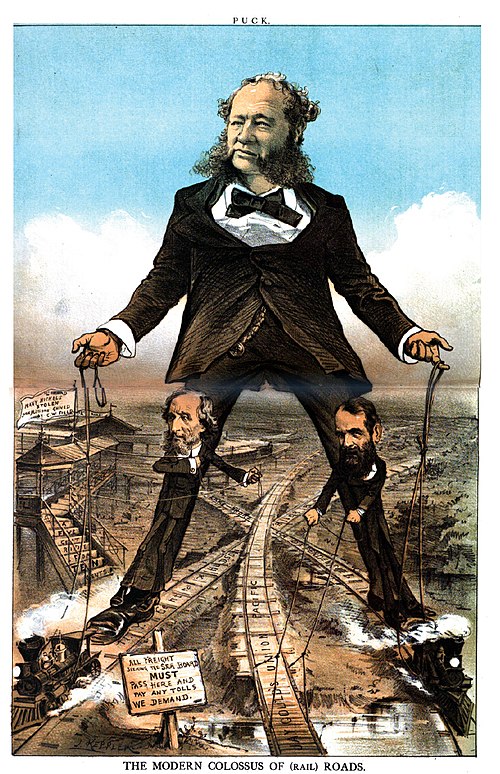
This 1879 anti-monopoly cartoon depicts powerful railroad barons controlling the entire rail system.
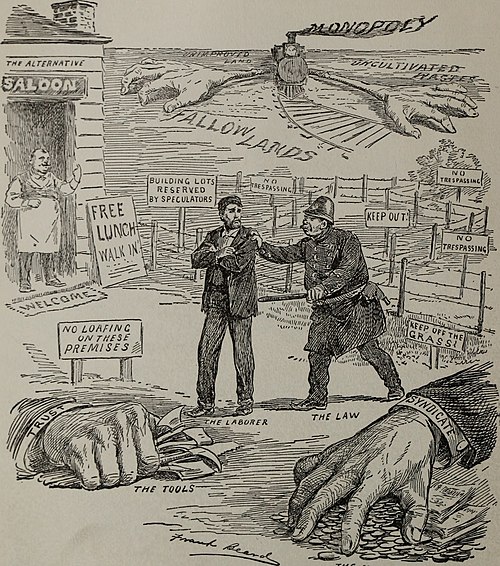
A 1902 anti-monopoly cartoon depicts the challenges that monopolies may create for workers.