Concealing-Coloration in the Animal Kingdom: An Exposition of the Laws of Disguise Through Color and Pattern; Being a Summary of Abbott H. Thayer's Discoveries is a book published ostensibly by Gerald
Cover of first edition

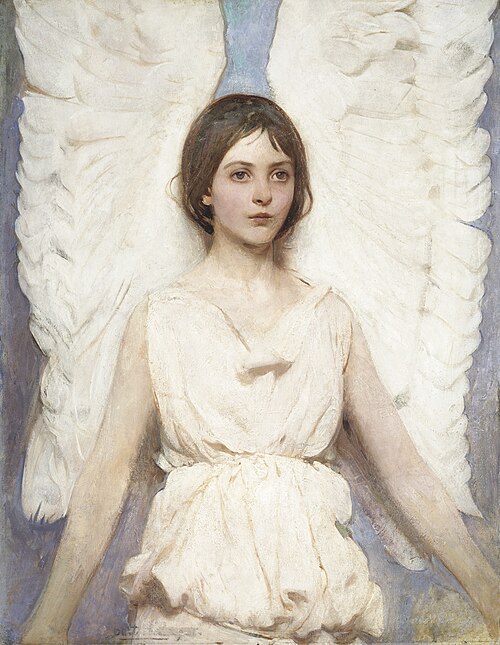
Angel, oil painting by Abbott Thayer, 1887

Abbott Thayer introduced the concept of Countershading in the book

Title page of first edition
The Colours of Animals
Videos
The Colours of Animals is a zoology book written in 1890 by Sir Edward Bagnall Poulton. It was the first substantial textbook to argue the case for Darwinian selection applying to all aspects of anima
Concealing-Coloration in the Animal Kingdom
…view of being "colored like their surroundings" does not explain how animal camouflage works. He acknowledges the prior work of Edward Bagnall Poulton (The Colours of Animals, 1890) in identifying countershading in caterpillars, quoting some passages where Poulton describes how larvae and pupae can appear flat. Countershading…

Cover of first edition

Title page of first edition of The Colours of Animals, 1890
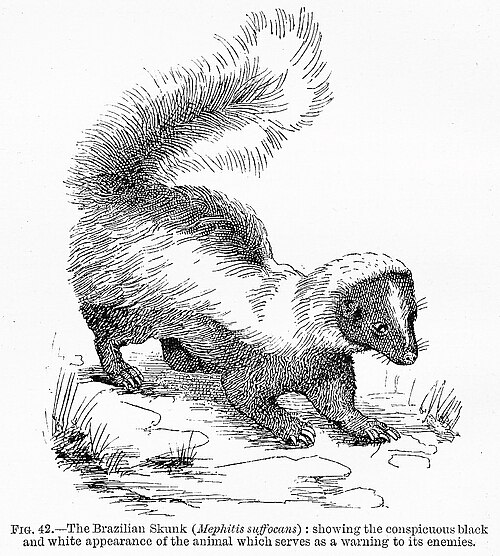
Warning coloration of the "Brazilian Skunk" in The Colours of Animals

Frontispiece: Mimicry in South African Butterflies, the only chromolithograph in the book