Confederate States dollar
The Confederate States dollar was first issued just before the outbreak of the American Civil War by the newly formed Confederacy. It was not backed by hard assets, but simply by a promise to pay the bearer after the war, on the prospect of Southern victory and independence. As the Civil War progressed and victory for the South seemed less and less likely, its value declined. After the Confederacy's defeat, its money had no value, and individuals and banks lost large sums.
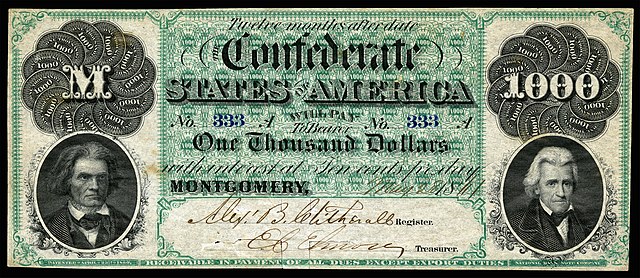
Image: CSA T1 $1000 1861
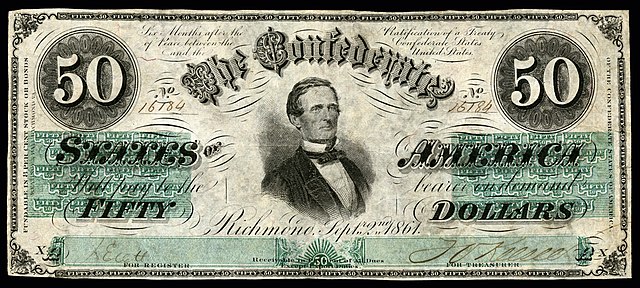
Image: CSA T16 $50 1862
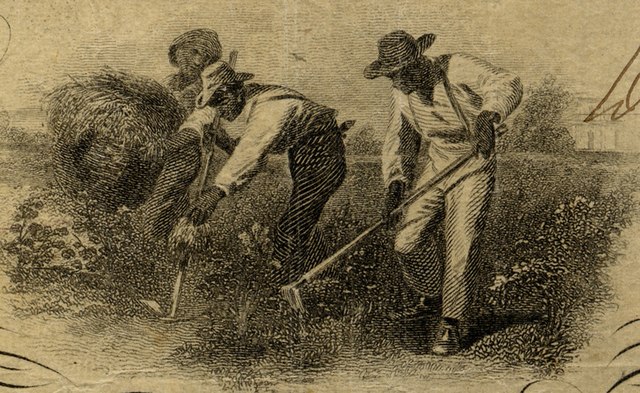
Slaves working in a field, as seen in a $100 C.S. banknote
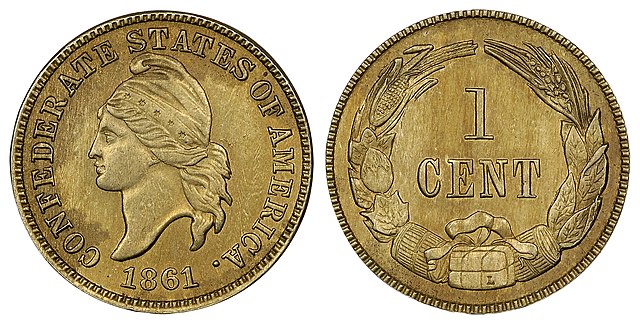
1861 1¢ original Confederate Cent
A banknote—also called a bill, paper money, or simply a note—is a type of negotiable promissory note, made by a bank or other licensed authority, payable to the bearer on demand. Banknotes were originally issued by commercial banks, which were legally required to redeem the notes for legal tender when presented to the chief cashier of the originating bank. These commercial banknotes only traded at face value in the market served by the issuing bank. Commercial banknotes have primarily been replaced by national banknotes issued by central banks or monetary authorities.
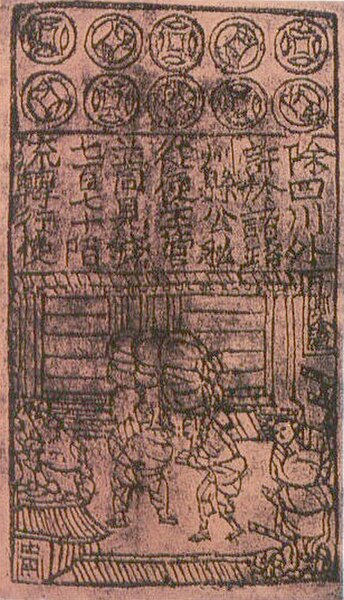
Song dynasty Jiaozi, the world's earliest paper money.
A Yuan dynasty printing plate and banknote with Chinese words.
Marco Polo described the use of early banknotes in China to Medieval Europe in his book, The Travels of Marco Polo.
The first paper money in Europe, issued by the Stockholms Banco in 1666.