Continental Army
Videos
The Continental Army was the army of the United Colonies representing the Thirteen Colonies and later the United States during the American Revolutionary War. It was formed on June 14, 1775, by a reso
George Washington, appointed Commander-in-Chief of the Continental Army on June 15, 1775, by the Second Continental Congress


An illustration of the Continental Army's Assistant Quartermaster General John Parke and Ezekiel Cheever, civilian commissary of artillery, giving instructions to a captain of artillery on the docks of New London, Connecticut in 1776
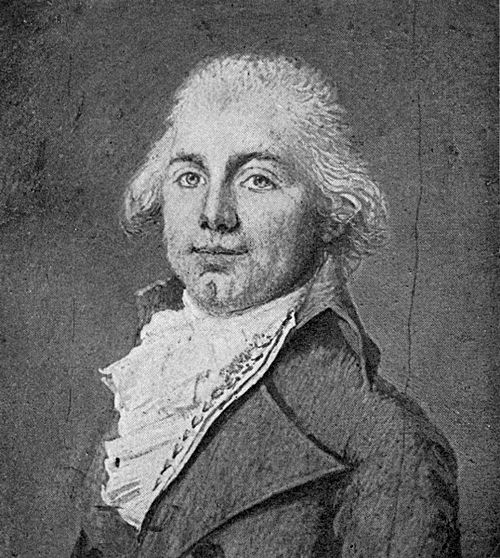
James Monroe, along with George Washington, one of the two future U.S. presidents who served in the Continental Army

A 1778 illustration showing a Stockbridge Mohican Indian patriot soldier with the Stockbridge Militia in Stockbridge, Massachusetts, taken from Hessian officer Johann Von Ewald's war diary
United States Army
Videos
The United States Army is the land service branch of the United States Armed Forces. It is designated as the army of the United States in the United States Constitution. As a part of the United States
Continental Army
…funding for the Army, but Washington managed nevertheless to secure important strategic victories. The Continental Army of 1783–1784 was succeeded by the United States Army, which exists to the present day. As peace was restored with the British, most of the regiments were disbanded in an orderly fashion, though several…

The storming of Redoubt No. 10 in the Siege of Yorktown during the American Revolutionary War, as depicted in a watercolor painting by H. Charles McBarron Jr. (1902–1992) prompted Great Britain's government to begin negotiations, resulting in the Treaty of Paris and Great Britain's recognition of the United States as an independent state.

General Andrew Jackson standing on the parapet of his makeshift defenses as his troops repulse attacking Highlanders during the defense of New Orleans, the final major and most one-sided battle of the War of 1812, mainly fought by militia and volunteers.

The Battle of Gettysburg, the turning point of the American Civil War

Army soldiers in 1890