Coracle
Videos
A coracle is a small, rounded, lightweight boat traditionally used in Wales, Ireland, particularly on the River Boyne, and Scotland, particularly on the River Spey. The word is also used for similar b
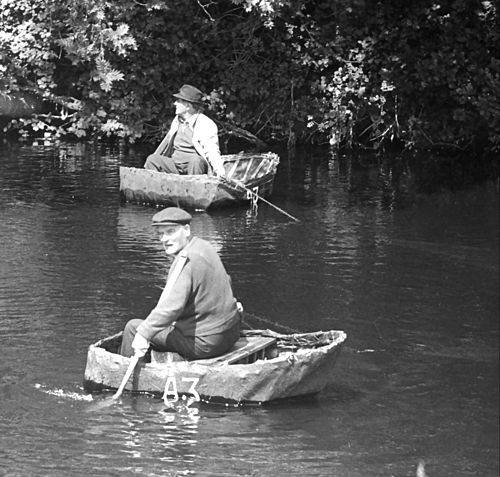
The River Teifi, West Wales The two men are John Davies (forefront) and Will Davies of Cenarth; the last two legitimate coracle fishermen in Cenarth. They are both using the single-arm method of propulsion; a means of gliding downstream in a controlled way. They carry their coracles and their fish home on their backs. (1972)

Britons with coracles – from Cassell's History of England, Vol. I, 1909

Coracle makers in Wales c.1842

Typical River Teifi coracle in Manordeifi Old Church
Madoc
Videos
In Welsh folklore, Madoc ab Owain Gwynedd was a Welsh prince who sailed to the Americas in 1170, over 300 years before Christopher Columbus's voyage in 1492. According to the story, Madoc was a son of
Coracle
…was undertaken to support a claim that Bull Boats of the Mandan Indians of North Dakota in the US could have been copied from coracles introduced by Prince Madog in the 12th century. For many years until 1979, Shrewsbury coracle maker Fred Davies achieved some notability amongst football fans; he would sit in…

Madog. Book illustration by A.S. Boyd, 1909.

George Catlin thought the Mandan bull boat to be similar to the Welsh coracle.

Plaque at Fort Morgan showing where the Daughters of the American Revolution supposed Madoc had landed in 1170.

Madoc's proponents believe earthen fort mounds at Devil's Backbone along the Ohio River to be the work of Welsh colonists.