Countershading
Videos
Countershading, or Thayer's law, is a method of camouflage in which an animal's coloration is darker on the top or upper side and lighter on the underside of the body. This pattern is found in many sp
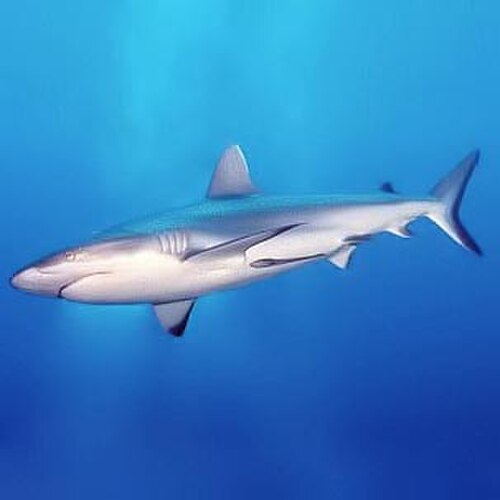
Many animals, such as this grey reef shark, are countershaded.

Illustration from the artist Abbot Thayer's 1909 book on camouflage of a Luna caterpillar Actias luna a) in position b) inverted.

Thayer's 1902 patent application. He failed to convince the US Navy.

Thayer's "White fowl, lacking counter-shading, against a flat white cloth."
Glaucus atlanticus
Videos
Glaucus atlanticus is a species of sea slug in the family Glaucidae.
Countershading
…including Automeris io and the eyed hawkmoth, Smerinthus ocellatus) habitually live 'upside down' with the belly uppermost. Similarly in the sea slug Glaucus atlanticus, the reverse countershading is associated with inverted habits. These animals are thus employing countershading in the usual way for camouflage…

Glaucus atlanticus 1 cropped

Glaucus atlanticus is the blue sea slug shown here out of water on a beach, and thus collapsed; however, touching the animal directly with one's skin can result in a painful sting, with symptoms similar to those caused by the Portuguese man o' war.

The slug in the water