County of Flanders
Videos
The County of Flanders was one of the most powerful political entities in the medieval Low Countries, located on the North Sea coast of modern-day Belgium and north-eastern France. Unlike the neighbou
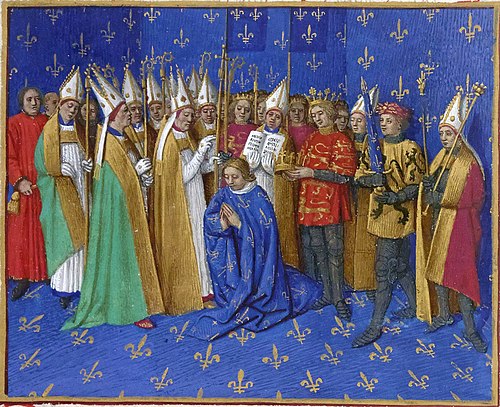
Count Philip (2nd from right) as swordbearer at Philip II's coronation. The count of Flanders was one of the 12 ancient Peers or "equals" of the King of France. (1455 panel painting by Jean Fouquet).
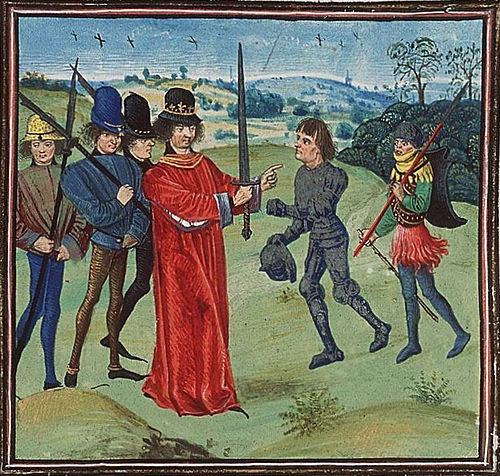
Institution of Baldwin I, the first count of Flanders by Charles the Bald, the Frankish king.

The Gravensteen at Ghent, Built by Philip of Alsace

A Flemish lady and gentleman in the year 1400, illustrated in the manuscript "Théâtre de tous les peuples et nations de la terre avec leurs habits et ornemens divers, tant anciens que modernes, diligemment depeints au naturel". Painted by Lucas d'Heere in the 2nd half of the 16th century. Preserved in the Ghent University Library.
Burgundian Netherlands
Videos
The Burgundian Netherlands were parts of the Low Countries that were ruled by the House of Valois-Burgundy between 1384 and 1482. During the Burgundian Age, those lands were also parts of the wider Va
County of Flanders
…united to the Duchy of Burgundy, and it formed the starting point for more acquisitions in the area by the duchy, and the eventual creation of the Burgundian Netherlands. The expansion of Flemish ("Burgundian") power deep into the Holy Roman Empire further complicated the relationship between Flanders and France, but…

Jean Wauquelin presenting his 'Chroniques de Hainaut' to Philip the Good, in Mons, County of Hainaut, Burgundian Netherlands

Members of the Privy Council during the solemn Funeral of Albert VII of Austria