The crisis of the late Middle Ages was a series of events across Europe during the late Middle Ages. These events involved extensive demographic collapse, political instability, and religious upheaval

Europe and the surrounding areas in the 14th century
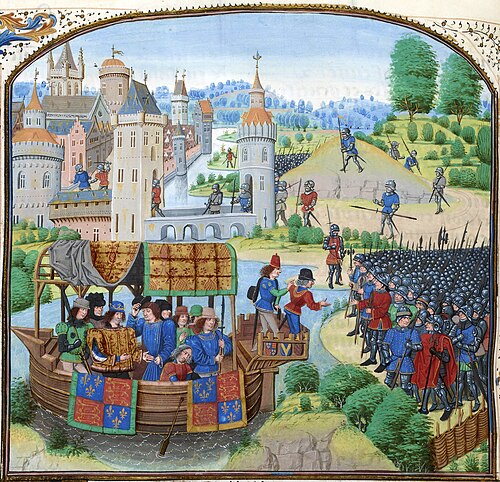
Richard II of England meets the rebels of the Peasants' Revolt of 1381.

Joan of Arc during the Siege of Orléans (1428–1429)
Black Death
Videos
The Black Death was a plague pandemic that occurred in Europe from 1346 to 1353. It was one of the most fatal pandemics in human history, leading to the death of up to 50 million people, around 30% to
Crisis of the late Middle Ages
…in the regional climate from the Medieval Warm Period to the Little Ice Age. The events of the Crisis include the Great Famine of 1315–1317 and the Black Death of 1347–1351, which caused very high mortality across the region. The population did not increase to pre-crisis levels until about 1500. Warfare and…

Yersinia pestis (200 × magnification), the bacterium that causes plague

The Oriental rat flea (Xenopsylla cheopis) engorged with blood. This species of flea is the primary vector for the transmission of Yersinia pestis, the organism responsible for spreading bubonic plague in most plague epidemics. Both male and female fleas feed on blood and can transmit the infection.

Oriental rat flea (Xenopsylla cheopis) infected with the Yersinia pestis bacterium which appears as a dark mass in the gut. The foregut (proventriculus) of this flea is blocked by a Y. pestis biofilm; when the flea feeds on an uninfected host Y. pestis is regurgitated into the wound, causing infection.
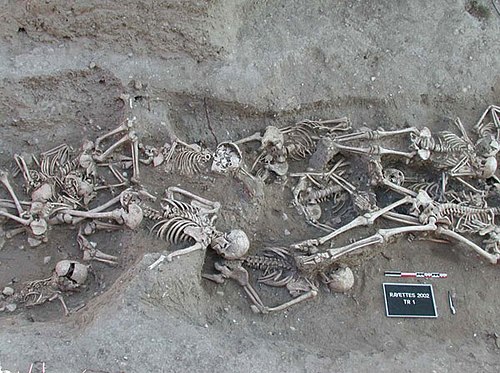
Skeletons in a mass grave from 1720 to 1721 in Martigues, near Marseille in southern France, yielded molecular evidence of the orientalis strain of Yersinia pestis, the organism responsible for bubonic plague. The second pandemic of bubonic plague was active in Europe from 1347, the beginning of the Black Death, until 1750.