Crusades
Videos
The Crusades were a series of military campaigns launched by the papacy between 1095 and 1291 against Muslim rulers for the recovery and defence of the Holy Land, as part of a wider crusading movement

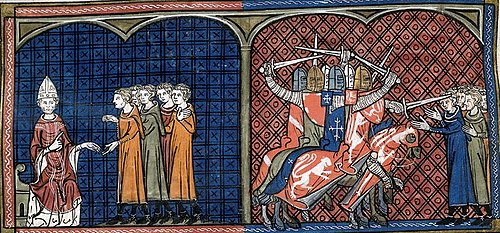
A 14th-century miniature depicting Pope Innocent III excommunicating Cathars and a subsequent massacre of heretics during the Albigensian Crusade in southern France.
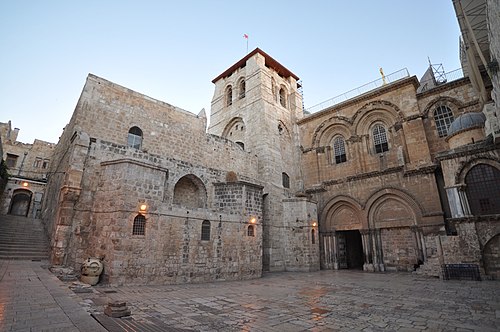
The Church of the Holy Sepulchre in Jerusalem, which was captured by the Seljuk Turks in 1071, triggering the geopolitical crises that led to the Crusades.

Detail of an 11th-century mural depicting a scene of the Last Judgement in the Abbey of Sant'Angelo in Formis, Italy
First Crusade
Videos
The First Crusade was the first of a series of religious wars, or Crusades, which were initiated, supported and at times directed by the Latin Church in the Middle Ages. Their aim was to return the Ho
Crusades
…by the papacy between 1095 and 1291 against Muslim rulers for the recovery and defence of the Holy Land, as part of a wider crusading movement. The First Crusade was proclaimed by Pope Urban II at the Council of Clermont in November 1095—a call to arms for Christians to reconquer Jerusalem from the Muslims, with…

Miniature of Peter the Hermit leading the People's Crusade (Egerton 1500, Avignon, 14th-century)

Anatolian Seljuk horseman, in Varka and Golshah, mid-13th century miniature (detail), Konya, Sultanate of Rum.

Pope Urban II at the Council of Clermont. Illustration from a copy of Sébastien Mamerot's Livre des Passages d'Outremer (Jean Colombe, c. 1472–75, BNF Fr. 5594)

An illustration showing the defeat of the People's Crusade, from Sébastien Mamerot's Livre des Passages d'Outre-mer (Jean Colombe, c. 1472–75, BNF Fr. 5594)