The cuisine of Monmouthshire is historically associated with Lady Augusta Hall, also known as Lady Llanover, who published one of the first Welsh cookery books called First Principles of Good Cookery (1867). The book uses a fictional Welsh hermit to give culinary advice to a visiting guest who is travelling though Wales.
"The First Meeting of the Hermit and the Traveller", from the book The First Principles of Good Cookery by Lady Llanover, first published in 1867. The story of the meeting forms the basis of the cookery book.
Llanover House, home of Lady Llanover
Cattle resting in front of Caldicot Castle
Statue of a Gloucester Old Spots Pig outside Newport Provisions Market, carrying baskets of fruit and vegetables, erected to celebrate over 700 years of markets in Newport, unveiled in 1994 by Cllr Ted Travers, who was then mayor of Newport, and made by Sebastian Boyesen, Newport's town sculptor at the time. (photo by Robin Drayton)
Welsh cuisine encompasses the cooking styles, traditions and recipes associated with Wales. While there are many dishes that can be considered Welsh due to their ingredients and/or history, dishes such as cawl, Welsh rarebit, laverbread, Welsh cakes, bara brith and Glamorgan sausage have all been regarded as symbols of Welsh food. Some variation in dishes exists across the country, with notable differences existing in the Gower Peninsula, a historically isolated rural area which developed self-sufficiency in food production.
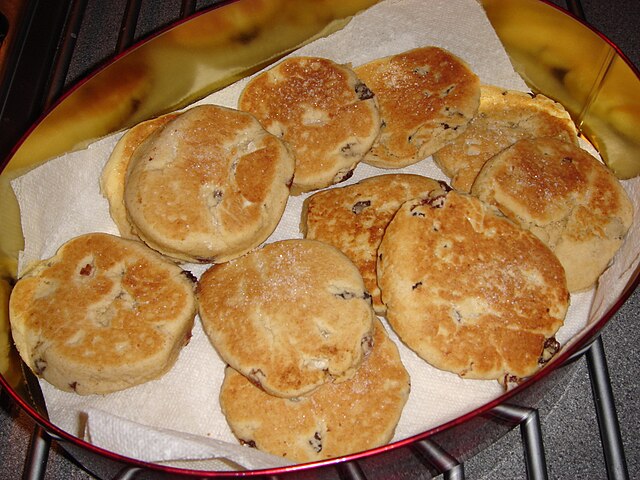
Welsh cakes
Page from the Laws of Hywel Dda
Welsh fishermen in coracles, in 1972
Caerphilly cheese