Culicinae
Videos
The Culicinae are the most extensive subfamily of mosquitoes and have species in every continent except Antarctica, but are highly concentrated in tropical areas. Mosquitoes are best known as parasite

Mosquito 2007 2

Culicine mosquito in 15 million year old amber
Mosquito
Videos
Mosquitoes, the Culicidae, are a family of small flies consisting of 3,600 species. The word mosquito is Spanish and Portuguese for little fly. Mosquitoes have a slender, segmented body, one pair of w
Culicinae
…The Culicinae are the most extensive subfamily of mosquitoes (Culicidae) and have species in every continent except Antarctica, but are highly concentrated in tropical areas. Mosquitoes are best known as parasites…
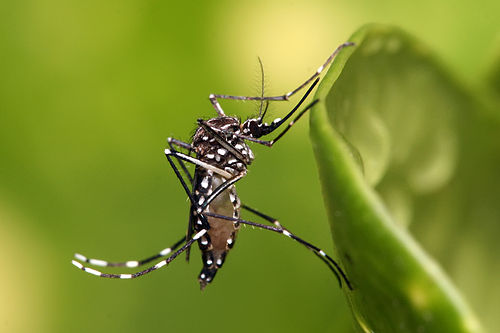
Aedes aegypti

Adult yellow fever mosquito Aedes aegypti, typical of subfamily Culicinae. Male (left) has bushy antennae and longer palps than female (right)

Anopheles eggs with side floats

Electron micrograph of a culicine egg