A number of ancient civilizations, including the Thracians, ancient Greeks, Scythians, Celts, ancient Romans, Goths, Slavs, Varangians and the Bulgars have left their mark on the culture, history and heritage of Bulgaria. Due to this great variety of influences, Bulgaria has adopted many unusual traditions. Thracian artifacts include numerous temples, tombs, golden treasures and ancient rites and rituals, while the Bulgars have left traces of their heritage in statehood, early architecture, music and dances. Thracian rituals such as the Tryphon Zarezan which is dedicated to Saint Tryphon of Campsada, Kukeri and Martenitsa are to this day kept alive in the modern Bulgarian culture.
The oldest treasure of worked gold in the world, dating back to the 5th millennium BC, comes from the site of the Varna Necropolis.
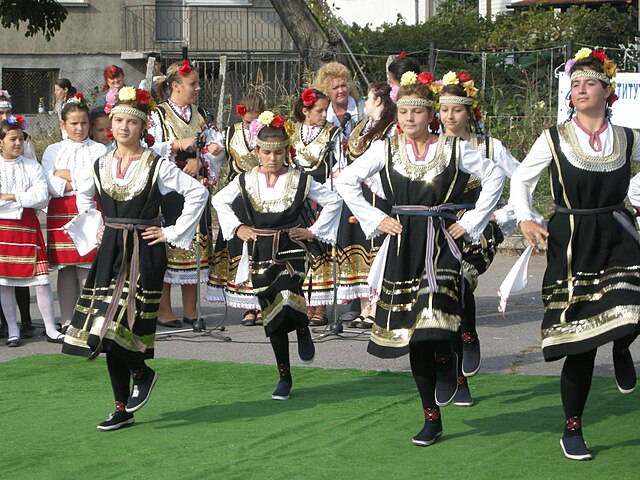
Bulgarian traditional dance.
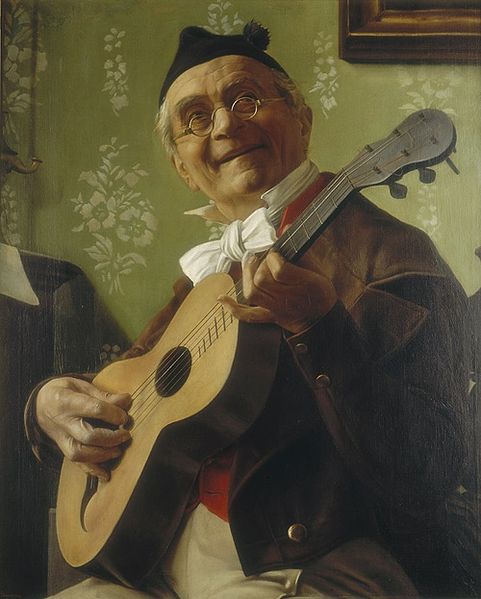
A man from Florence, 1888 Renaissance-style painting by Konstantin Velichkov.
Kukeri in Razlog
Gadulka, a traditional folk instrument.
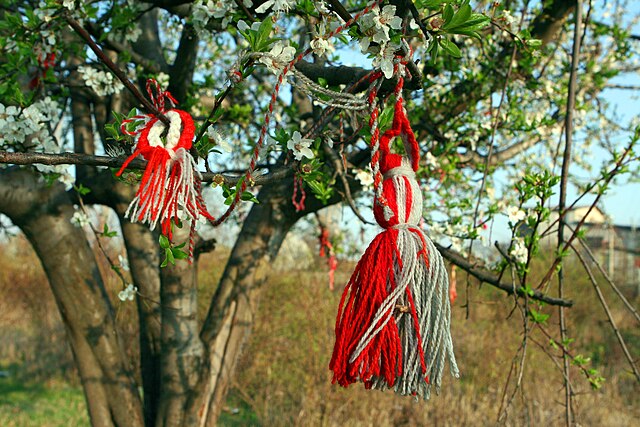
A Martenitsa is a small piece of adornment, made of white and red yarn and usually in the form of two dolls, a white male and a red female. Martenitsi are worn from Baba Marta Day until the wearer first sees a stork, swallow, or blossoming tree. The name of the holiday means "Grandma March" in Bulgarian and Macedonian, the holiday and the wearing of Martenitsi are a Bulgarian and Macedonian tradition related to welcoming the spring, which according to Bulgarian and Macedonian folklore begins in March.
Martenitsi tied to a blossoming tree, a symbol of approaching spring
Another tied Martenitsa
Blossoming Magnolia full of tied Martenitsi