Cybele
Videos
Cybele is an Anatolian mother goddess; she may have a possible forerunner in the earliest Neolithic at Çatalhöyük. Greek colonists in Asia Minor adopted and adapted her Phrygian cult and spread it to
Cybele enthroned, with lion, cornucopia, and mural crown. Roman marble, c. 50 AD. Getty Museum

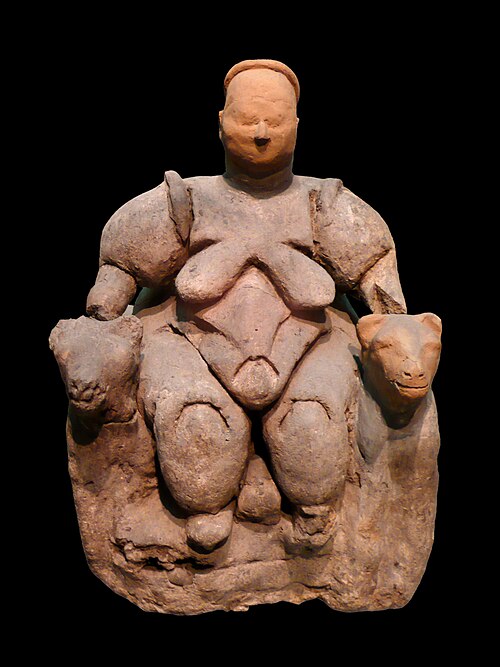
Seated Woman of Çatalhöyük, flanked by large felines as arm-rests, c. 6,000 BC

Seated Cybele within a naiskos (4th century BC, Ancient Agora Museum, Athens)

Cybele in a chariot driven by Nike and drawn by lions toward a votive sacrifice (right); above are heavenly symbols including a solar deity, Plaque from Ai Khanoum, Bactria (Afghanistan), 2nd century BC; Gilded silver, ⌀ 25 cm
Attis
Videos
Attis was the consort of Cybele, in Phrygian and Greek mythology.
Cybele
…Greek religion, she had a eunuch mendicant priesthood, the Galli. Many of her Greek cults included rites to a divine Phrygian castrate shepherd-consort Attis, who was probably a Greek invention. In Greece, Cybele became associated with mountains, town and city walls, fertile nature, and wild animals, especially…

Statue of Attis from Roman Hierapolis

Statue of a reclining Attis at the Shrine of Attis in Ostia Antica near Rome.

Attis wearing the Phrygian cap. Terracotta thymiaterion at the Louvre from Tarsus